How to Choose Portfolio Examples for Fiverr & Upwork Proposals
Choosing the right portfolio examples can be the difference between a proposal that feels generic and one that immediately feels relevant. On Fiverr and Upwork, clients rarely want to study your entire career. They want quick evidence that you understand their type of project, have solved similar problems, and can move their work forward without unnecessary risk.
This guide explains how to choose portfolio examples for Fiverr and Upwork proposals using a client-first method. It also shows how the Fiverr and Upwork Proposal Generator can help you turn the client’s requirements, your experience, and your most relevant project links into a focused proposal.
Why portfolio selection matters more than having a huge portfolio
A large portfolio is useful for credibility, but more examples do not automatically create a stronger proposal. When a client posts a website redesign, sending ten unrelated logo projects creates noise. When a client needs a product catalog, showing only app interfaces may demonstrate design ability but not direct relevance.
The better question is not “What work have I done?” It is “Which piece of my work gives this client the strongest reason to believe I can handle this job?” That change in perspective is the foundation of a client-first proposal.
Your portfolio should support the argument you are already making in the proposal. If your opening says you understand the client’s need for a clean WordPress contact page, a relevant WordPress project is stronger evidence than a beautiful but unrelated poster. If the client needs a Shopify product page, a similar ecommerce interface is usually more persuasive than a general collection of graphic designs.
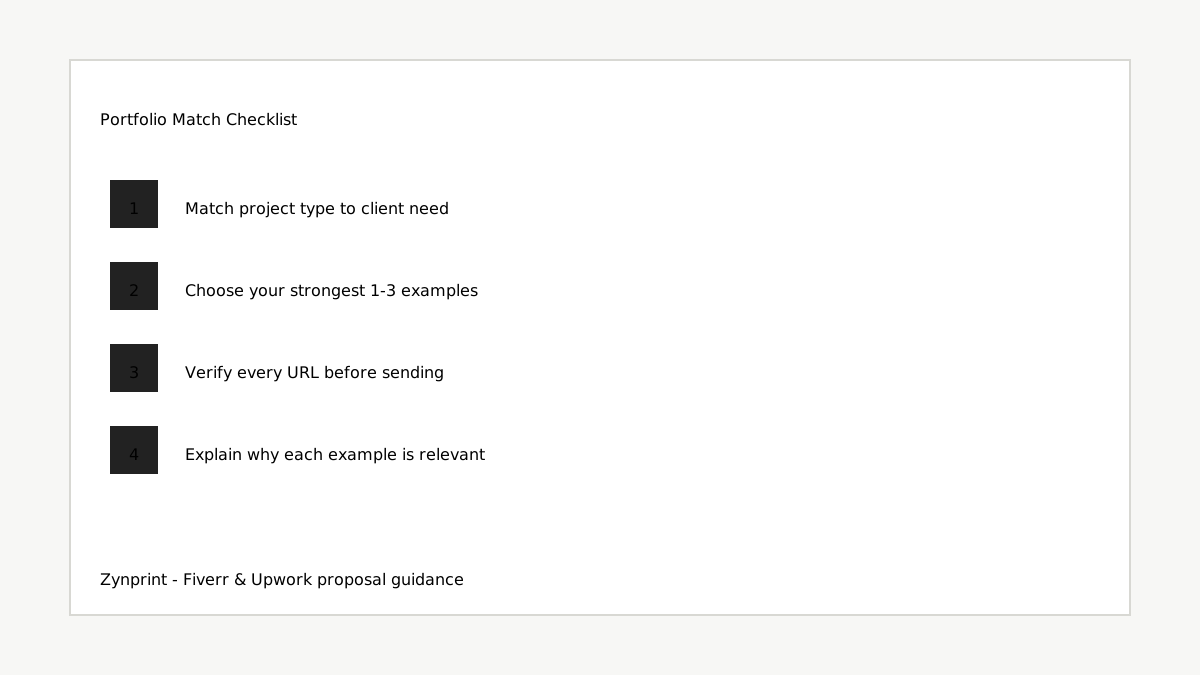
Portfolio Match Checklist: select examples that directly support the client’s requirements.
The client-first portfolio selection framework
Use this four-step process before adding a portfolio link to a Fiverr or Upwork proposal.
1. Identify the client’s core need
Read the job description and reduce it to one practical sentence. Do not start with your own skills. Start with what the client is trying to accomplish.
- “The client needs a responsive WordPress website refresh.”
- “The client needs a product catalog and sales sheet.”
- “The client needs a Shopify store with stronger product presentation.”
- “The client needs a mobile app interface designed in Figma.”
This sentence becomes your portfolio filter. Every example you consider should answer the question: “Does this prove I can help with that exact need or a closely related one?”
2. Find the closest project match
Look for similarity in the type of work, business problem, deliverable, platform, audience, or desired outcome. You do not need an identical project. A close parallel is often enough if you explain the connection clearly.
For example, suppose a client needs a WordPress service website for a local business. A previous WordPress website for another service company can be highly relevant even if the industries differ. The shared characteristics may include service-page structure, lead-generation sections, mobile responsiveness, contact forms, calls to action, and local-business presentation.
3. Select one to three strong examples
In most proposals, one highly relevant example can be stronger than a long list. If you have several relevant projects, select the strongest one first, then add one or two supporting examples only when they prove something different.
Think of the portfolio as evidence, not decoration. Each link should earn its place.
4. Explain the relevance
Never assume the client will click a link and figure everything out. Give the client a short reason to open it.
Instead of writing:
“Here is my portfolio: example.com”
Write:
“I recently worked on a service-business website with a similar focus on clear service sections, mobile usability, and lead-focused contact elements. I can apply the same practical structure to your project.”
The second version creates context. The client knows why the link matters before clicking.
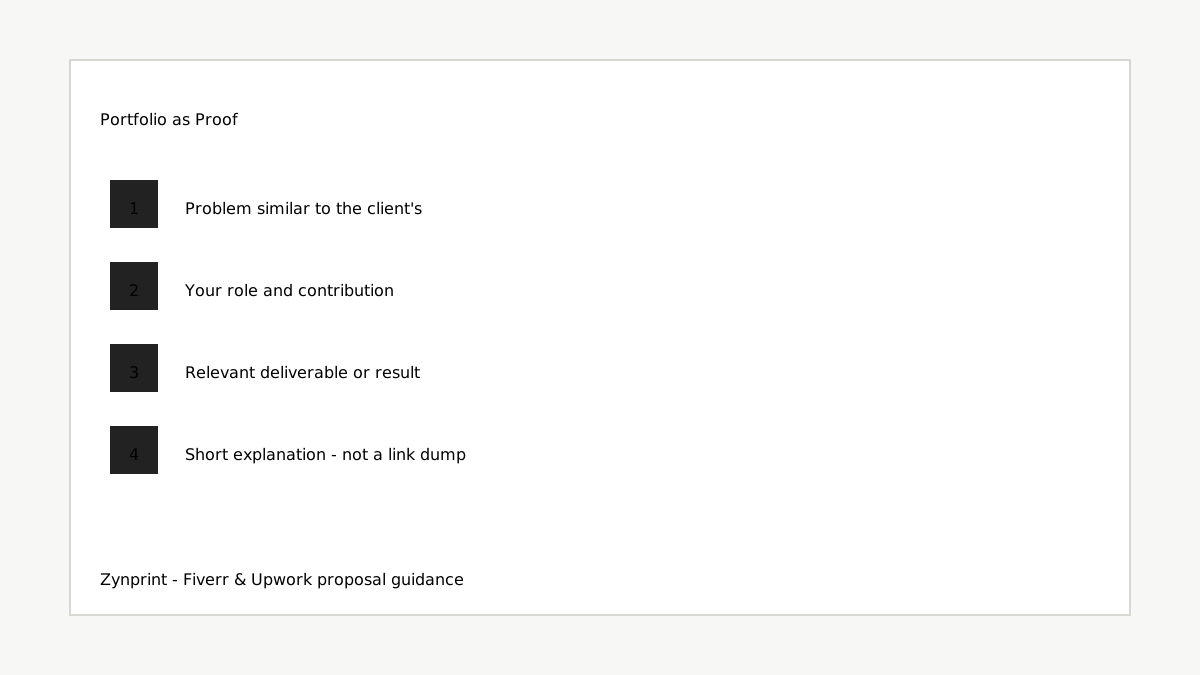
Portfolio as Proof: connect the client’s problem, your contribution, and the relevant evidence.
How to choose portfolio examples from a Fiverr job
Fiverr proposals and buyer conversations are often more service-oriented. A buyer may already be comparing sellers based on a defined service, delivery expectations, reviews, examples, and communication. Your portfolio should therefore reinforce the specific service they are considering.
If the request is for a logo, prioritize branding and identity examples. If it is a catalog, show catalogs, sales sheets, brochures, or structured editorial design. If it is WordPress work, show websites with comparable layouts, responsive behavior, or functionality.
A useful Fiverr approach is:
- Lead with the closest project.
- Describe the similarity in one sentence.
- Show only supporting examples that add evidence.
- Keep the proposal focused on the buyer’s requested outcome.
Do not turn the proposal into a portfolio directory. The client does not need every project you have completed.
How to choose portfolio examples from an Upwork job
Upwork proposals benefit from more explicit job-specific matching. A client may have provided detailed requirements, technical constraints, preferred tools, deliverables, or business goals. Use those details to decide which examples deserve attention.
If the job asks for Elementor, a WordPress Elementor project is stronger evidence than a general website screenshot. If the job asks for Figma UI/UX, select interface work and explain the design problem you solved. If the job is for ecommerce, show ecommerce work and mention relevant product, cart, checkout, or conversion-oriented experience where appropriate.
A strong Upwork portfolio sentence can follow this pattern:
“Your requirement for [specific deliverable] is similar to a project where I handled [relevant responsibility], so I’ve included that example because it is the closest match to what you need.”
Do not confuse visual similarity with project similarity
A project can look similar without being relevant. A dark website and another dark website may share a visual style but solve completely different business problems. Likewise, two mobile screens may look similar while one is a booking app and the other is an internal dashboard.
Look beyond appearance. Compare:
- Platform or technology
- Type of deliverable
- Business model
- Target audience
- Functional requirements
- Design or development constraints
- Your actual role in the project
The closer the underlying problem, the stronger the portfolio evidence.
Use your role to make the portfolio more credible
If you worked as part of a team, be accurate about your contribution. A client wants to know what you personally handled. Saying “We built a large ecommerce platform” is less useful than explaining that you designed the product-page UI, implemented the WordPress frontend, created the responsive layouts, or prepared the print-ready catalog, depending on what you actually did.
This also prevents a common proposal problem: claiming ownership of work you cannot confidently discuss during a call or revision cycle.
How many portfolio links should you include?
There is no universal number that works for every proposal. Relevance should control the number.
For a tightly defined job, one excellent example may be enough. For a broader project, two or three examples can demonstrate different capabilities. More than that can become counterproductive if the client has to sort through unrelated work.
Use this simple rule:
- 1 link: when you have one almost-perfect match.
- 2 links: when a second example proves an important supporting skill.
- 3 links: when the project has multiple major requirements and each example proves a different one.
- 4+ links: only when the client specifically asks for a larger portfolio or the project requires broad evidence.
The goal is not maximum quantity. The goal is maximum signal.
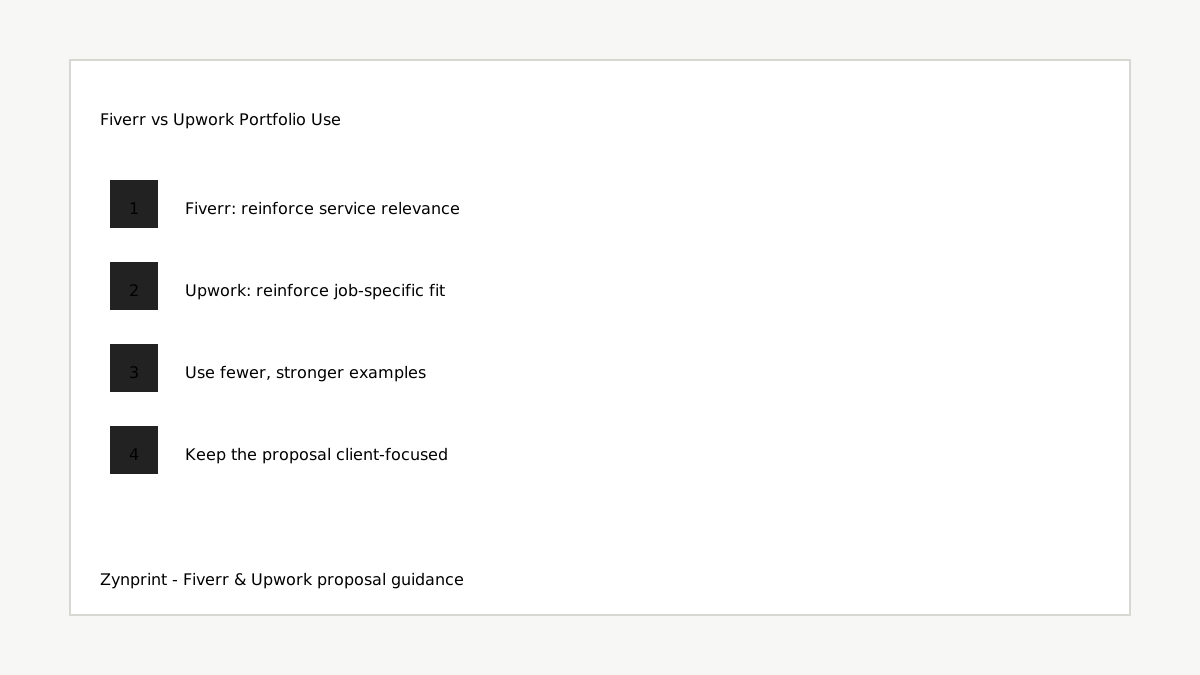
Fiverr vs Upwork Portfolio Use: adapt the amount and explanation of evidence to the platform and client context.
Portfolio mistakes that weaken Fiverr and Upwork proposals
Mistake 1: Sending unrelated work
Unrelated work can make a proposal look automated. If the client needs a website and your first three links are illustrations, packaging, and social media graphics, the client has to work too hard to find evidence of website experience.
Mistake 2: Sending too many links
A long list can look like you are trying to compensate for weak relevance. Choose the strongest evidence instead.
Mistake 3: Using broken or incorrect URLs
A broken portfolio link damages trust at exactly the moment you are asking the client to trust you with their project. Always test important URLs before sending.
Mistake 4: Calling everything “similar”
If every project is described as “similar,” the statement loses credibility. Explain the specific similarity: platform, deliverable, business problem, audience, or responsibility.
Mistake 5: Making the portfolio the main subject
Your proposal is not a portfolio announcement. The client’s project should remain the main subject. Portfolio evidence should support your understanding of the job.
How to build a client-first proposal around your portfolio
A strong proposal can be structured around four connected parts:
- Client need: show that you understand what the client is looking for.
- Relevant parallel: connect that need to a project you have handled.
- Practical approach: explain two or three useful actions you would take.
- Evidence and next step: provide the most relevant portfolio examples and invite the client to continue the conversation.
This is the same philosophy behind the Zynprint Fiverr & Upwork Proposal Generator. The goal is not to create a random template filled with keywords. The goal is to turn the job description and relevant experience into a proposal that feels written for that particular client.
Practical example: graphic design project
Imagine a client says: “I need a professional product catalog and sales sheet for my new product line.”
A weak response might say:
“Hi, I am a professional graphic designer. I have 10 years of experience and can design your catalog. Here is my portfolio.”
A stronger client-first version would be:
“I noticed you are looking for someone who can create a professional product catalog and sales sheet for your new product line. This usually comes up when a business needs its product information organized into a presentation that is easy for customers or sales teams to understand, which is similar to catalog and marketing design projects I have worked on. I would focus on clear product hierarchy, consistent visual presentation, print-ready setup, and a layout that works for both presentation and practical sales use.
I’ve included the most relevant examples rather than a long list of unrelated work. If you share the product information and preferred format, I can also suggest a practical page structure before the design starts at no extra cost.
Best regards!”
Notice what makes this stronger: the portfolio is not presented as proof in isolation. It is connected to the client’s situation.
Practical example: WordPress project
Suppose an Upwork client needs a WordPress contact page redesigned because the existing page looks outdated and performs poorly on mobile.
Choose a WordPress project that demonstrates responsive layout, form presentation, clear calls to action, or similar business-page structure. Then explain the connection.
“Your request to clean up the WordPress contact page is similar to a website project where I improved page structure, responsive presentation, and contact-focused elements. I would keep the redesign focused on usability, spacing, mobile behavior, and a clearer path for visitors to contact your business.”
This is more persuasive than simply saying “I am a WordPress expert.”
How the free proposal generator can help
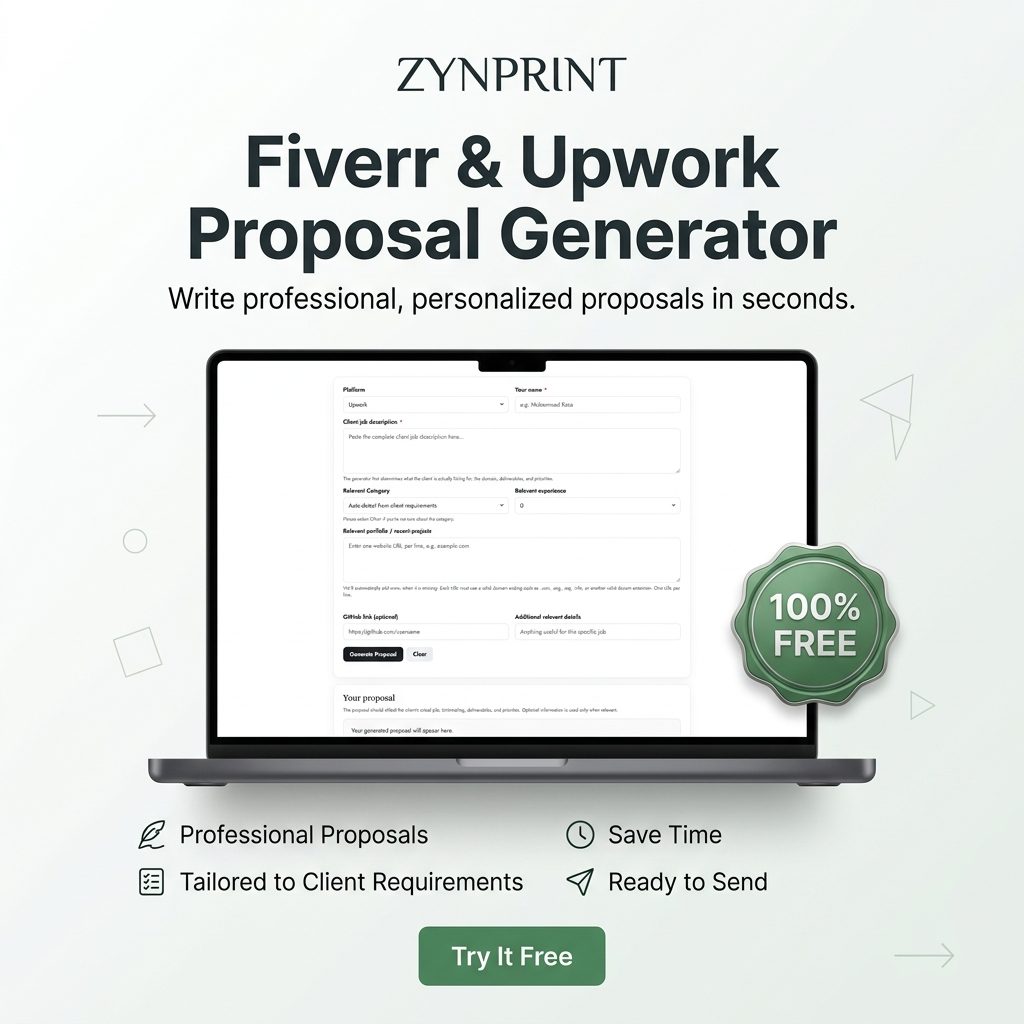
If you write proposals frequently, the hardest part is often not typing. It is deciding what deserves attention. The 100% FREE Fiverr and Upwork Proposal Generator is designed to help organize that process.
You provide the client’s job description, your name, relevant experience, and valid portfolio or recent-project URLs. The tool analyzes the client requirements, identifies the relevant category and context, and builds a client-first proposal around the information you provide.
Because the portfolio field is designed for valid website URLs, you can focus on selecting real project evidence rather than pasting arbitrary text. The best results still come from choosing genuinely relevant work and reviewing the generated proposal before sending it.
For another perspective on proposal writing, this YouTube resource from Freelancer Files covers keeping proposals concise, demonstrating understanding of requirements, and including relevant portfolio examples: Upwork proposal sample: 11 tips from a $500k freelancer.
You can also review Upwork Proposal Writing | Tips & Tricks, which focuses on analyzing the client, identifying pain points, and avoiding common proposal errors. A third useful resource is Fiverr proposal writing and portfolio tips on YouTube.
Use the portfolio to create curiosity, not pressure
A good proposal does not need to say, “Please hire me.” It should make the next conversation easier. A relevant portfolio example can create that curiosity naturally because the client sees that you have handled something close to their situation.
You can use a closing line such as:
“I’d be happy to review your current requirements and point out a few practical improvements before you decide on the next step. There may be some simple changes that can make the final result more effective.”
This gives the client a reason to reply without sounding aggressive.
Final portfolio checklist before sending a Fiverr or Upwork proposal
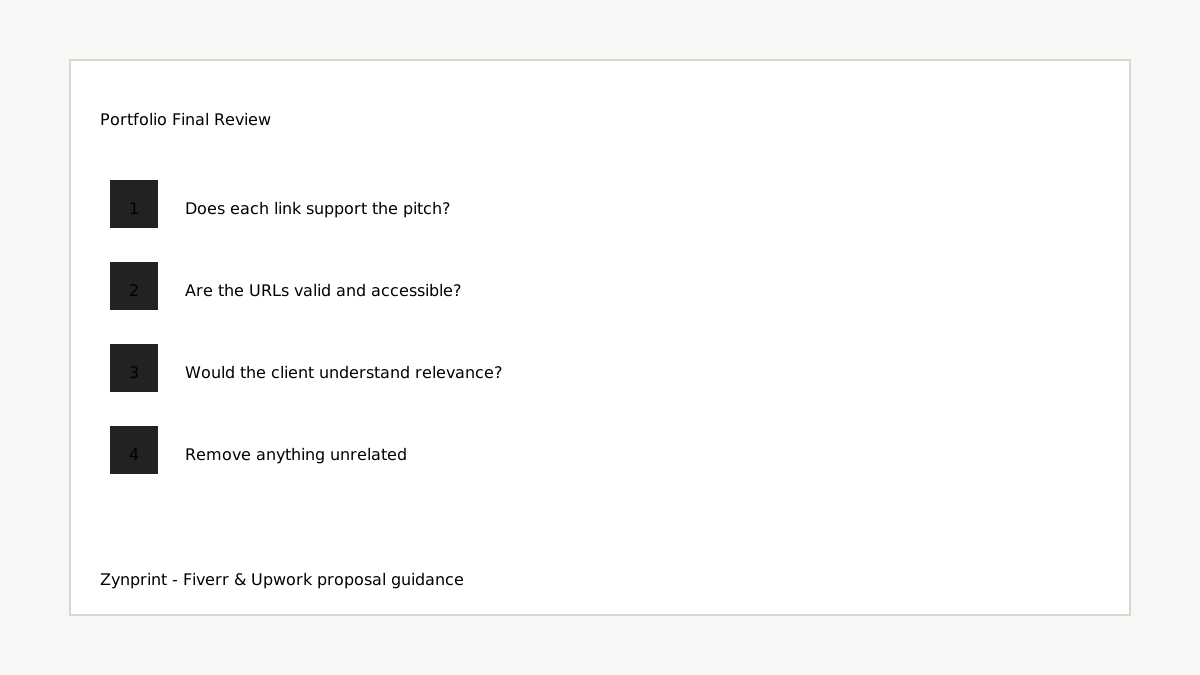
Portfolio Final Review: complete this quick check before submitting your proposal.
- Does the first portfolio example directly relate to the client’s main requirement?
- Can you explain in one sentence why the example is relevant?
- Did you select your strongest one to three examples instead of dumping links?
- Are the portfolio URLs valid and accessible?
- Does each project accurately represent your own contribution?
- Are you using evidence that matches the platform, deliverable, or business problem?
- Does the proposal talk more about the client’s needs than your biography?
- Have you included a practical approach rather than generic promises?
- Does the closing invite a useful next step?
- Have you removed anything unrelated?
SEO and commercial search terms for proposal writers
Relevant search phrases for this topic include Fiverr proposal examples, Upwork proposal examples, how to write a Fiverr proposal, how to write an Upwork proposal, best freelance proposal tips, freelance proposal template, client-first proposal, portfolio examples for freelancers, how to choose portfolio projects, Upwork portfolio tips, Fiverr portfolio tips, freelance bidding tips, and proposal writing for freelancers.
Commercial-intent phrases include Fiverr proposal generator, Upwork proposal generator, Fiverr and Upwork proposal generator, free freelance proposal generator, free Upwork proposal writer, free Fiverr proposal tool, professional proposal generator, freelance proposal writing tool, and client proposal generator. These terms describe the practical problem this tool is built to solve without replacing the need for human judgment.
Final takeaway
Your portfolio is most powerful when it answers the client’s question before they have to ask it: “Have you handled something like this before?”
Choose examples by relevance, not by how impressive they look in isolation. Match the project type, platform, business problem, deliverable, and your actual role. Use one to three strong examples, explain why they matter, verify every URL, and keep the client’s requirement at the center of the proposal.
Then use the 100% FREE Fiverr and Upwork Proposal Generator to turn the client’s job description and your relevant experience into a focused starting draft. Review it, personalize the final details, confirm your portfolio links, and send a proposal that gives the client a clear reason to continue the conversation.
Hashtags: #Fiverr #Upwork #Freelancing #ProposalWriting #FiverrProposals #UpworkProposals #FreelanceTips #PortfolioTips #FreelanceBusiness #ProposalGenerator