New AI Inventions in 2026: 10 Breakthroughs Changing Technology
- by Muhammad Raza
- 0 Comments
- 16 minutes read
- 84 Views
New AI inventions in 2026 are moving far beyond the chatbot era. The latest breakthroughs are giving AI stronger reasoning, the ability to use tools and take actions, better understanding of images and audio, more capable robotics, scientific research support, and increasingly agentic software development.
The important shift is from AI that mainly generates information toward systems that can reason through complex tasks, interact with software and physical environments, and assist with real-world work.
This guide tracks major artificial intelligence breakthroughs and 10 new AI inventions shaping 2026, explaining how they work, why they matter, and what they could mean for businesses, developers, freelancers, researchers, and everyday users.
Important: AI development is moving quickly. Some technologies discussed below are commercially available, while others remain research projects, previews, or emerging technologies. A promising demonstration should not automatically be treated as a mature product.
What This Means for Businesses
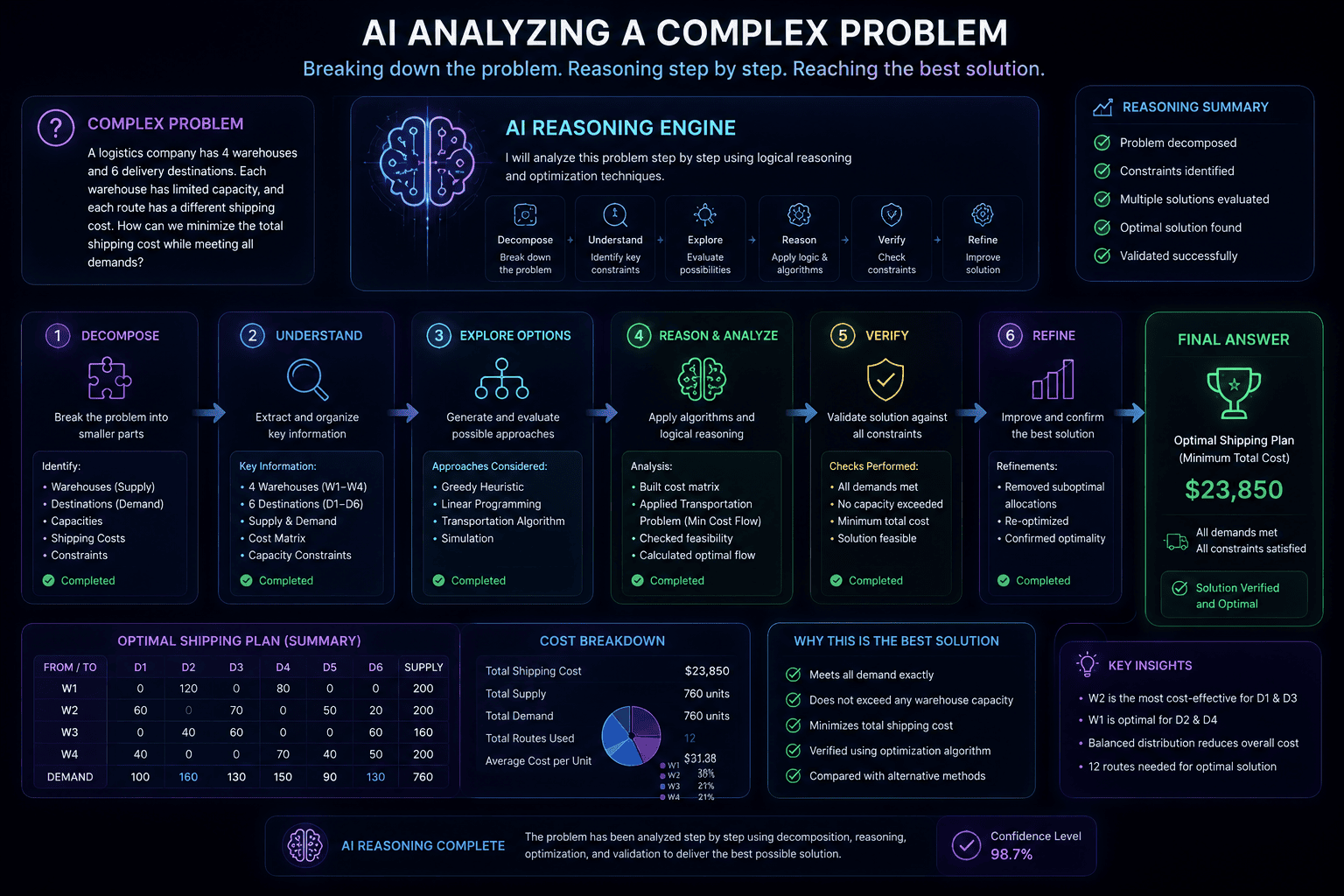
Small businesses may use stronger reasoning models for:
- Market research
- Technical documentation
- Proposal preparation
- Data analysis
- Software development
- Internal knowledge management
- Business planning
However, stronger reasoning does not eliminate the need for verification.
A more capable model can still produce an incorrect conclusion.
The best use is therefore to treat AI as a powerful collaborator rather than an unquestionable authority.
2. AI Agents Are Moving From Chat to Action
Another major AI invention is the development of AI agents.
A traditional chatbot generally waits for a question and returns an answer.
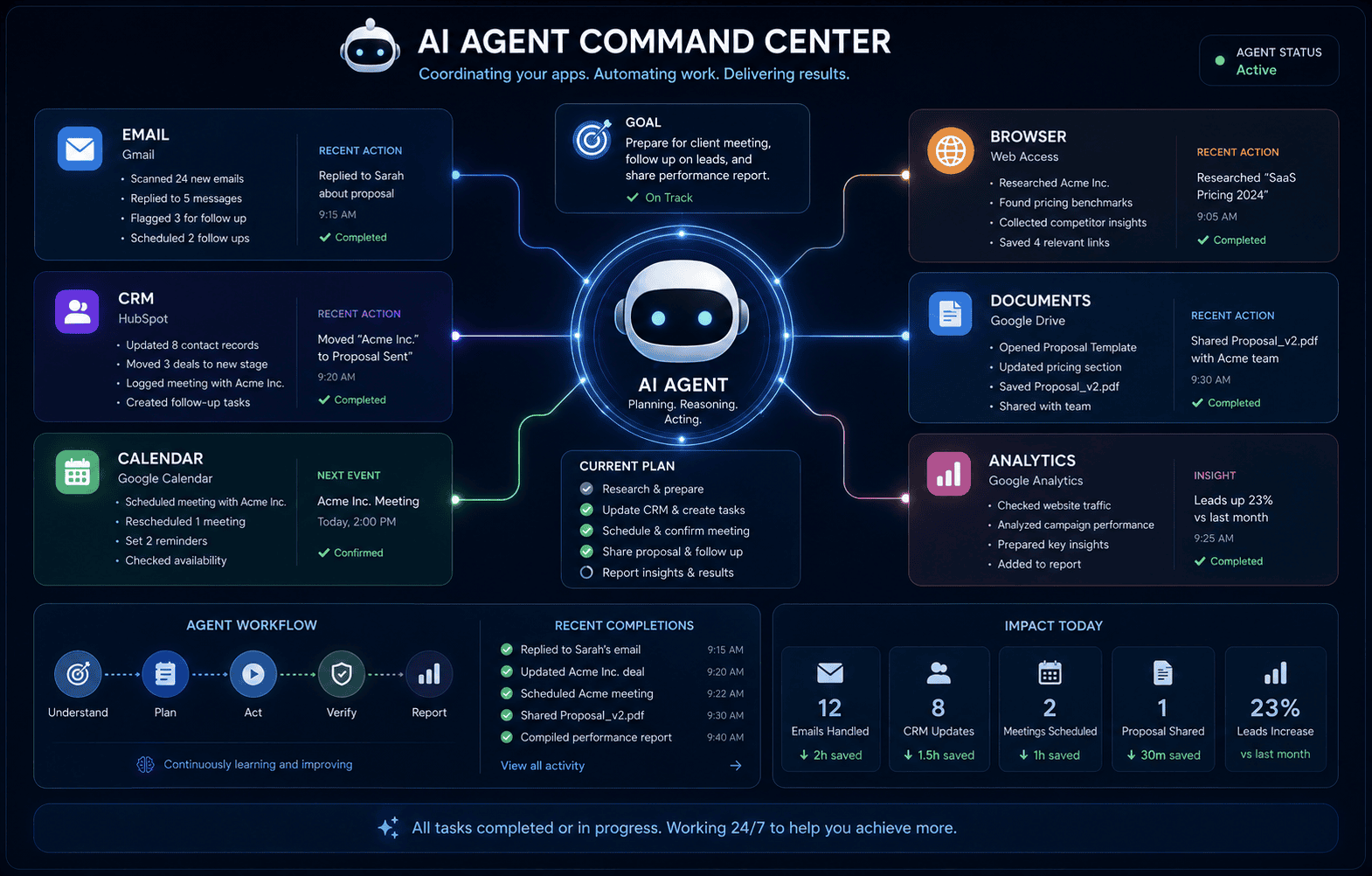
An AI agent can potentially:
- Understand a goal.
- Break the goal into tasks.
- Select tools.
- Perform actions.
- Observe results.
- Adjust its approach.
- Continue until the task is complete.
This is a major change.
Instead of:
“Tell me how to research competitors.”
an agent could potentially:
Research approved sources → collect information → organize findings → compare competitors → produce a report.
Google’s 2026 announcements show this broader transition toward agentic experiences. At Google I/O, the company described its direction as moving beyond AI tools that primarily help users write toward agents that help users act.
AI Agent Example
Imagine a freelancer receives a project request.
A future agent could:
- Read the inquiry.
- Extract requirements.
- Create a customer record.
- Research the client’s company.
- Prepare questions for a discovery call.
- Draft a proposal.
- Create follow-up reminders.
The freelancer would still make the important decisions.
The agent would handle much of the administrative work.
Why Agents Matter
Agents could change software from something users operate manually into something users delegate tasks to.
Instead of opening five applications and transferring information between them, a person could describe the desired outcome.
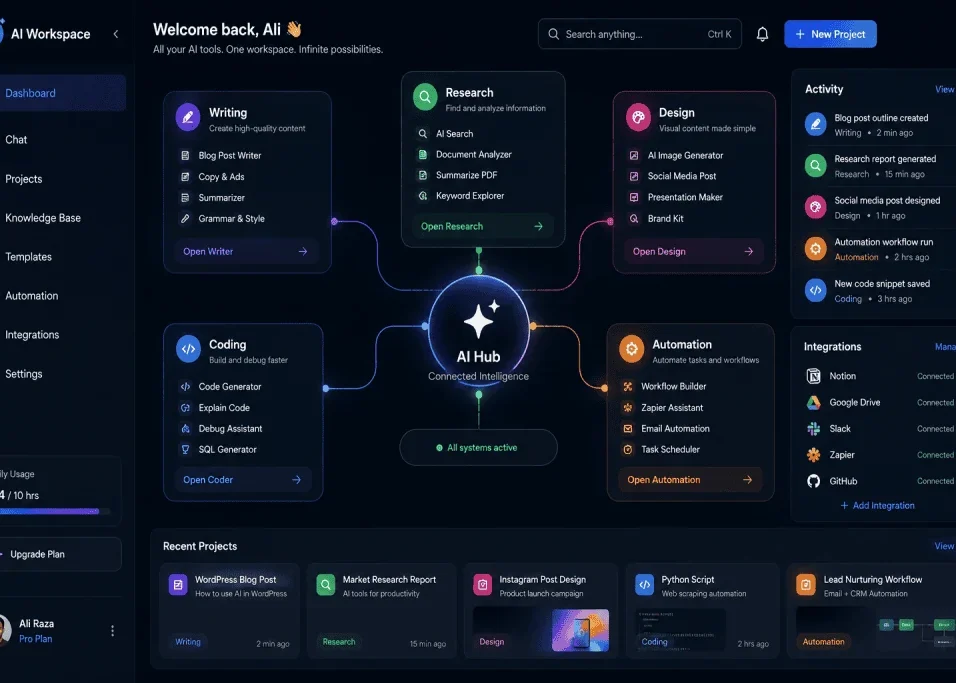
The AI would coordinate the workflow.
That is one of the biggest potential changes in business software.
3. AI Robotics and Physical Intelligence
Perhaps the most exciting AI invention category in 2026 is physical AI.
For years, AI primarily operated inside computers.
Robotics changes the equation.
A robot must understand:
- Space
- Objects
- Movement
- Physics
- People
- Timing
- Force
- Unexpected events
A chatbot can make a mistake in a sentence.
A robot making the wrong physical movement can drop an object, damage equipment, or hurt someone.
This makes robotics significantly more difficult.
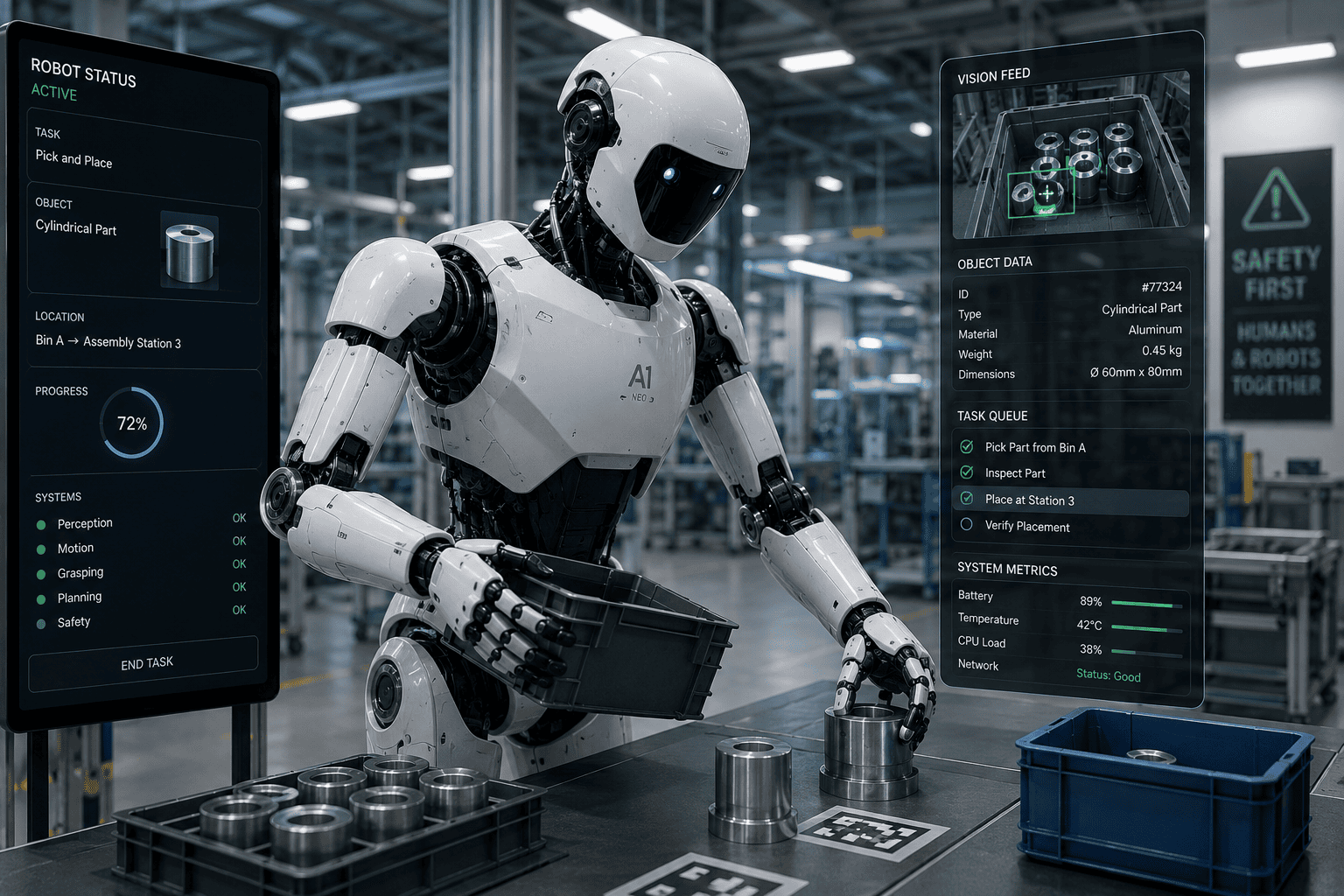
Google DeepMind is actively developing robotics systems that combine AI reasoning with physical interaction. Its 2026 announcements include Gemini Robotics ER 2 and work focused on video understanding, task orchestration, multi-robot collaboration, and whole-body intelligence.
Meanwhile, the global robotics industry is increasingly discussing whether robots could reach a major “ChatGPT moment” in which they become capable of performing a broad range of unfamiliar tasks using natural-language instructions. Reuters reported in August 2026 that Unitree’s CEO viewed such a breakthrough as possible but still potentially years away.
What Makes Physical AI Different?
Imagine telling a robot:
“Please clean the table.”
A human immediately understands that this could involve:
- Identifying objects.
- Determining which items belong elsewhere.
- Avoiding fragile objects.
- Moving around obstacles.
- Picking up objects with different shapes.
- Understanding when the table is clean.
That requires generalization.
The robot cannot simply memorize one movement.
It needs to understand the environment.
Where Physical AI Could Be Used
Potential applications include:
- Manufacturing
- Warehousing
- Agriculture
- Healthcare
- Logistics
- Construction
- Home assistance
- Inspection
- Disaster response
But widespread household robotics still faces substantial technical and economic challenges.
The technology is promising, but today’s demonstrations should not be confused with universally capable human-level robots.
4. World Models: AI That Learns About Environments
Another emerging invention is the world model.
A world model attempts to represent how an environment works.
Instead of only predicting the next word, a system can learn relationships between:
- Objects
- Actions
- Time
- Space
- Consequences
This matters enormously for robotics.
Suppose a robot sees a glass on a table.
A useful physical intelligence system needs to understand that:
- The glass occupies space.
- It can be picked up.
- Excessive force could break it.
- Moving it changes the environment.
- Other objects may block access.
This is more complicated than recognizing the word “glass.”
Recent reporting describes world models as an emerging approach for connecting AI with physical environments, including robotic control. The concept is increasingly being explored as a way to help machines learn through simulated environments before operating in the real world.
Why Simulations Matter
Training robots directly in the physical world can be:
- Expensive
- Slow
- Dangerous
- Difficult to reproduce
A simulated environment can allow AI systems to practice thousands or millions of scenarios.
The system can learn:
If I do X, Y happens.
Then it can potentially transfer some of that knowledge into the real world.
This could become a critical foundation for future robotics
5. AI Is Becoming a Scientific Research Partner
One of the most important developments may happen outside consumer technology.
AI is increasingly being used to support scientific research.
Modern research involves enormous quantities of information.

Scientists may need to analyze:
- Scientific papers
- Experimental results
- Genomic data
- Chemical structures
- Simulations
- Measurements
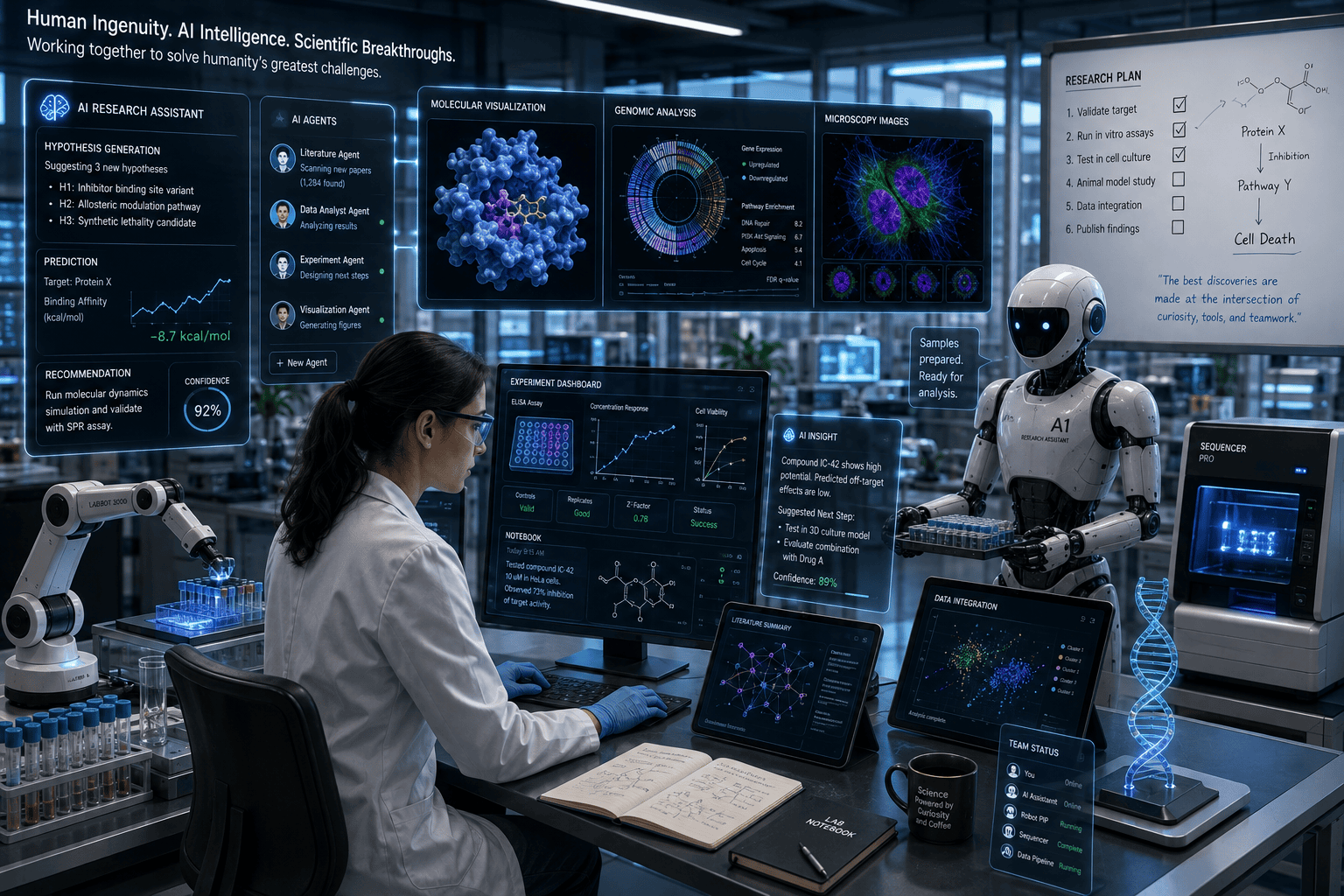
- Computer code
AI can help researchers search, analyze, summarize, model, and generate hypotheses.
OpenAI’s 2026 research releases include GPT-Rosalind, a system designed for life-science research with capabilities in biological reasoning, medicinal chemistry, genomics analysis, and experimental workflows.
OpenAI also reported a near-autonomous AI chemist project in which an AI system was used to improve a challenging medicinal-chemistry reaction.
AI and Drug Discovery
Drug development is extremely complicated.
Researchers need to understand:
- Molecular structures
- Chemical reactions
- Biological mechanisms
- Potential toxicity
- Drug interactions
- Experimental results
AI can help narrow the search space.
Instead of testing every possible candidate, researchers can use computational models to prioritize promising possibilities.
The human scientist remains essential because experimental validation is still required.
AI can suggest.
Laboratories must verify.
6. AI-Powered Voice Systems Are Becoming More Natural
Voice AI is another area experiencing major development.
Older voice assistants often followed a simple structure:
User speaks → speech converted to text → command processed → response generated → speech synthesized.
Newer voice systems are increasingly designed to process speech more directly and respond with more natural interaction.
OpenAI introduced GPT-Live in July 2026 as a new generation of voice models intended to provide more natural human-AI interaction.
Google and other AI companies are also investing heavily in multimodal voice experiences.
Why Better Voice AI Matters
Voice is often faster than typing.
Imagine an AI assistant that can:
- Understand interruptions
- Recognize conversational context
- Translate speech
- Answer questions
- Read information aloud
- Help navigate software
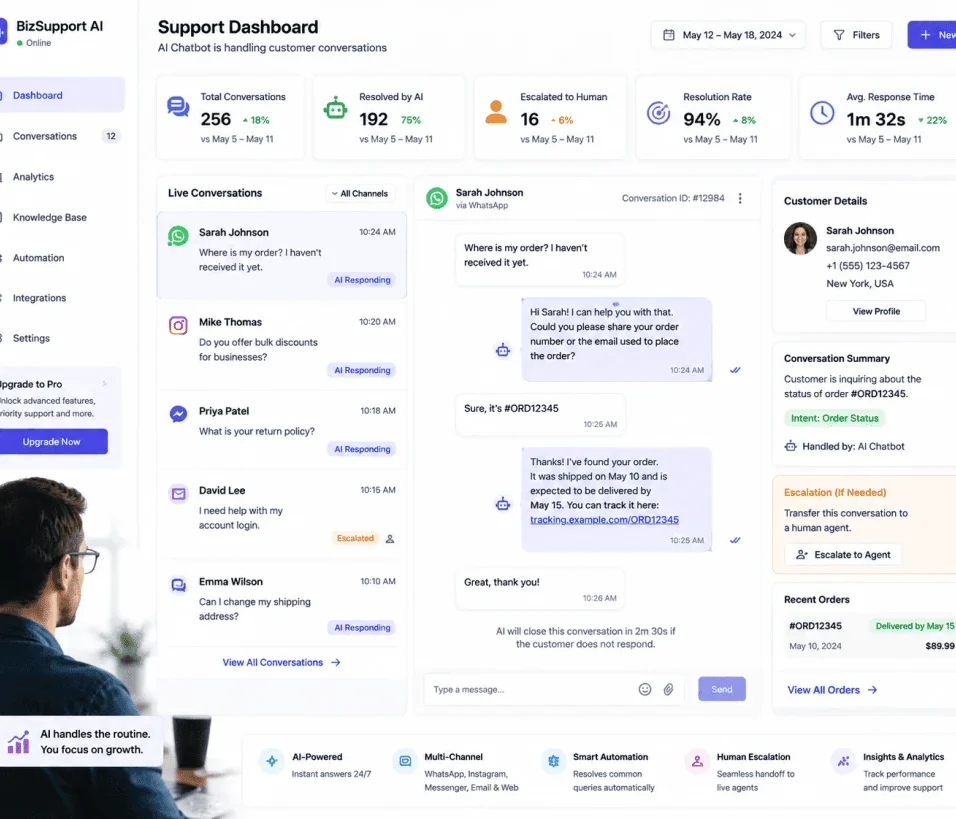
- Assist with customer service
This could make AI more accessible to people who do not want to interact with a keyboard.
Business Applications
Voice AI could become useful for:
- Customer support
- Sales calls
- Appointment scheduling
- Reception systems
- Language translation
- Employee assistance
- Accessibility
But businesses need to disclose when customers are interacting with AI where applicable and should implement safeguards around recordings, personal data, and sensitive conversations.
7. Multimodal AI Is Combining Text, Image, Audio and Video
Another important AI invention is multimodal intelligence.
Older AI systems often specialized in one type of input.
A text model processed text.
A computer-vision model processed images.
A speech model processed audio.
Modern systems increasingly combine several forms of information.
For example, an AI system might receive:
- A written instruction
- A photograph
- A video
- A voice message
- A document
and reason across them.
Google’s 2026 I/O announcements included Gemini Omni, which Google described as a multimodal model capable of creating and understanding different forms of media, starting with video.
Example
A business owner could upload:
- A photograph of a product.
- A customer complaint.
- A product manual.
- A short video demonstrating the problem.
A multimodal AI system could potentially combine all four sources to help identify what happened.
This is much closer to how humans interact with information.
Humans rarely experience the world as text alone.
We see, hear, read, speak, and observe.
Multimodal AI attempts to reproduce some of that flexibility.
8. AI Video and Creative Generation Are Expanding
AI-generated video is also developing rapidly.
Early AI video systems often struggled with:
- Motion consistency
- Hands
- Faces
- Object identity
- Physics
- Long scenes
Modern systems are becoming increasingly capable of generating and editing visual content.
This creates opportunities for:
- Marketing
- Advertising
- Education
- Entertainment
- Product demonstrations
- Social media
- Training materials
Google DeepMind’s current product lineup includes multimodal and creative-generation systems, while its 2026 releases also include Lyria 3.5 for AI-generated music with improvements in musicality, lyrics, vocals, and creative control.
The Business Opportunity
A small company may eventually create a complete marketing campaign using AI-assisted production:
Product information
↓
Script
↓
Voice
↓
Visuals
↓
Video
↓
Captions
↓
Social-media versions
However, businesses should not assume that generated media is automatically accurate or original.
Human review remains important, especially for brand claims, product demonstrations, trademarks, and factual statements.
9. AI Cybersecurity and Automated Red Teaming
As AI becomes more powerful, protecting AI systems becomes increasingly important.
This has led to another interesting invention:
AI systems that help test other AI systems.
OpenAI’s GPT-Red research describes an automated red-teaming system using self-play to improve robustness, safety, alignment, and resistance to prompt injection.
This represents an interesting feedback loop.
Instead of:
Human finds vulnerability → human reports vulnerability → developer fixes it.
AI can potentially participate in:
AI attacker searches for weaknesses → AI defender analyzes them → developers improve safeguards.
Why This Matters
AI systems can face attacks such as:
- Prompt injection
- Malicious instructions
- Data leakage
- Tool misuse
- Unauthorized actions
- Adversarial inputs
As businesses connect AI to real systems, security becomes increasingly important.
An AI that can read email is one thing.
An AI that can read email, access a CRM, create invoices, and send messages has much greater potential impact if compromised.
Therefore:
More AI capability requires more AI security.
10. AI Is Becoming a Tool for Building Software
Software development is another area undergoing a major transformation.
AI can already help with:
- Writing code
- Debugging
- Explaining code
- Creating tests
- Refactoring
- Documentation
- Generating prototypes
The next step is more agentic coding.
Instead of asking:
“Write this function.”
developers can increasingly give an AI coding system a broader objective:
“Build this feature, test it, identify problems, and prepare the changes.”
OpenAI’s GPT-5.6 release specifically highlights agentic coding, computer use, design judgment, and the ability to coordinate multiple agents for complex work.
OpenAI has also published research about scientific computing in the age of agentic AI, describing how researchers are using AI coding agents to modernize scientific computing and support discovery.
What This Means for Developers
The role of a developer may increasingly move toward:
- Defining requirements
- Designing architecture
- Reviewing AI-generated code
- Testing
- Security
- Debugging complex failures
- Making technical decisions
The ability to write code manually will still matter.
But knowing how to direct, evaluate, and supervise AI-generated software may become equally important.
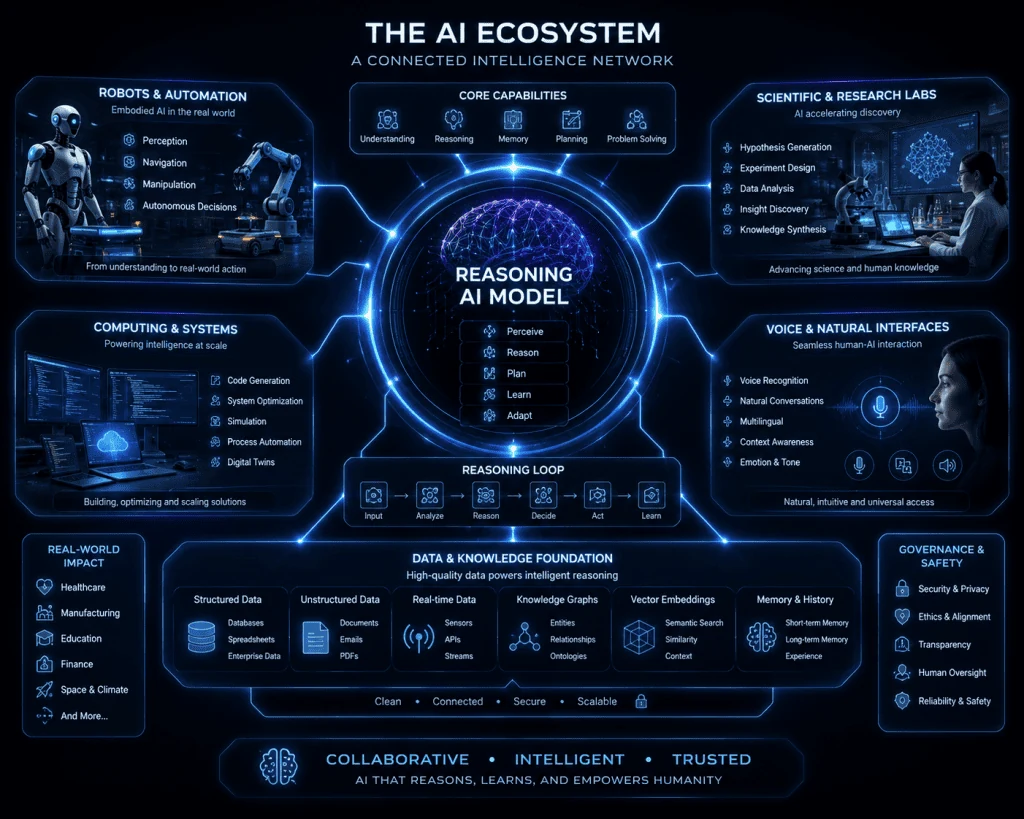
How These AI Inventions Are Connected
At first glance, these inventions may seem unrelated.
Reasoning models.
Robots.
Voice AI.
Scientific AI.
AI video.
Cybersecurity.
Coding agents.
But they are connected by a larger trend.
AI is moving through several layers.
Layer 1: Understanding
AI understands text, images, audio, and video.
Layer 2: Reasoning
AI analyzes information and solves increasingly complicated problems.
Layer 3: Planning
AI breaks goals into multiple steps.
Layer 4: Tool Use
AI interacts with software and external systems.
Layer 5: Physical Interaction
AI operates robots and other machines.
Layer 6: Scientific Discovery
AI helps researchers investigate complex problems.
This progression creates a new vision of artificial intelligence.
Instead of an AI that simply answers:
“What should I do?”
the future increasingly points toward AI that can help:
“Understand the problem, plan the work, use the appropriate tools, and help execute the solution.”
What These New AI Inventions Mean for Small Businesses
You do not need a robotics laboratory to benefit from these developments.
Small businesses can take advantage of the same underlying trends through software.
Customer Service
AI can classify inquiries and prepare responses.
Marketing
AI can help transform one piece of content into multiple formats.
Sales
AI can research leads and organize customer information.
Administration
AI can process documents and summarize meetings.
Development
AI coding tools can accelerate software projects.
Research
AI can help organize large quantities of information.
Voice
AI assistants can support customer interactions.
The key is to focus on business problems rather than chasing every new AI product.
What About AI Inventions for Freelancers?
Freelancers may be among the biggest beneficiaries of these technologies.
A freelancer often sells time.
That creates a natural ceiling.
AI can reduce the amount of time spent on administrative tasks.
For example:
Before AI
Client inquiry
→ Read manually
→ Research client
→ Write response
→ Create proposal
→ Schedule meeting
→ Take notes
→ Send follow-up
With AI assistance
Client inquiry
→ AI extracts requirements
→ Research summary
→ Proposal draft
→ Meeting scheduling
→ AI meeting summary
→ Follow-up draft
The freelancer still controls the relationship.
AI handles repetitive preparation.
This allows the freelancer to focus more on:
- Strategy
- Design
- Communication
- Negotiation
- Creativity
- Delivery
What About WordPress Websites?
AI innovation is also relevant to WordPress.
A modern WordPress business could connect AI to:
- Contact forms
- CRM
- Analytics
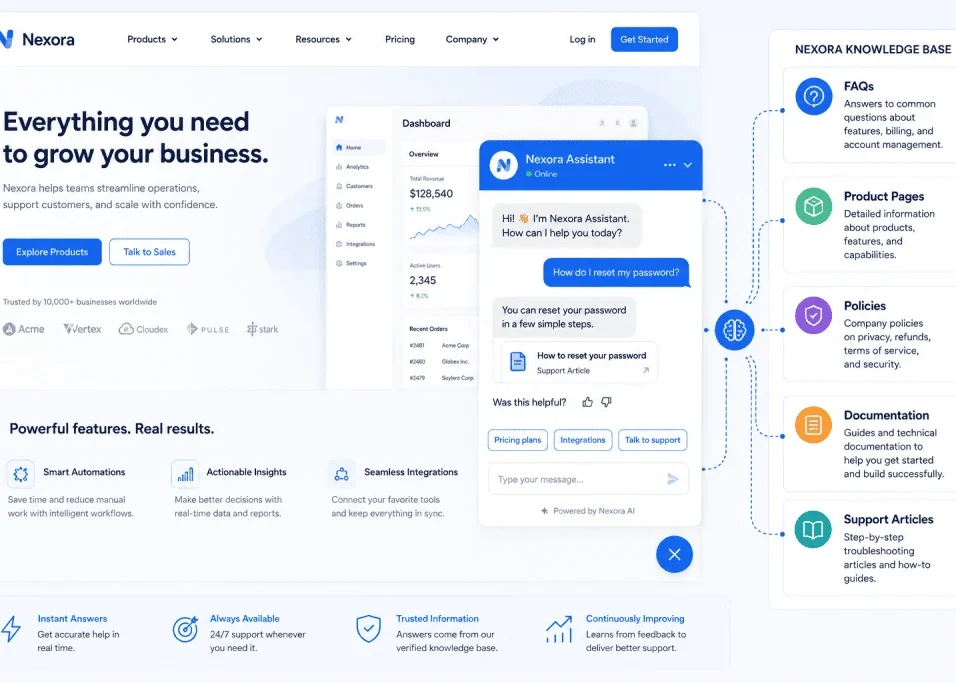
- Customer support
- Content workflows
- Product catalogs
- Appointment systems
For example:
Visitor submits a question
↓
AI identifies intent
↓
Relevant information retrieved
↓
Response prepared
↓
Human approval if necessary
↓
Customer receives answer
This creates a more intelligent website without requiring the website itself to become fully autonomous.
For publishers, AI can also assist with:
- Content research
- Topic organization
- Content briefs
- FAQ extraction
- Metadata drafts
- Social-media repurposing
However, publishers should avoid using AI simply to mass-produce low-value pages.
Google’s current search guidance emphasizes helpful, reliable, people-first content, and its documentation warns against using scaled content primarily to manipulate search rankings.
Are These AI Inventions Going to Replace Humans?
This is one of the most common questions.
The answer is more complicated than “yes” or “no.”
AI will likely automate some tasks.
But a task is not the same thing as a complete profession.
For example, AI may automate:
- Data entry
- Basic summarization
- Routine coding
- Document classification
- Draft writing
But businesses still need people for:
- Judgment
- Leadership
- Relationships
- Accountability
- Creativity
- Negotiation
- Ethics
- Physical work
- Strategic decisions
The more realistic future is often:
Human + AI
rather than:
Human vs AI
A person who knows how to use advanced AI effectively may become significantly more productive.
The Biggest Challenges Facing New AI Inventions
AI progress is impressive, but significant challenges remain.
Reliability
AI can still make mistakes.
Hallucinations
AI may generate information that sounds convincing but is incorrect.
Security
AI agents connected to tools create new attack surfaces.
Privacy
AI systems may process sensitive information.
Cost
Advanced models and large-scale inference can become expensive.
Regulation
Governments are developing new rules around AI.
Bias
Training data and system design can produce undesirable outcomes.
Physical Safety
Robots have consequences that purely digital systems do not.
Human Oversight
Businesses must determine when AI can act and when humans must approve decisions.
These challenges mean that AI development should not be measured only by how impressive a demonstration looks.
A useful AI system must also be:
- Reliable
- Secure
- Affordable
- Controllable
- Understandable
- Appropriate for its intended use
How to Keep Up With AI Inventions Without Getting Overwhelmed
New AI announcements appear almost every day.
Trying every new tool is impossible.
Instead, follow a structured approach.
1. Follow Major Research Organizations
Monitor official research publications from organizations such as Google DeepMind and OpenAI.
Their current research feeds show developments spanning models, robotics, science, safety, and multimodal AI.
2. Follow the Technology, Not Just the Product
Do not focus only on model names.
Learn about:
- Reasoning
- Agents
- Multimodality
- Robotics
- World models
- AI coding
- Scientific AI
- AI safety
These concepts remain useful even when individual products change.
3. Test Tools Against Real Problems
Instead of asking:
“Is this AI tool popular?”
ask:
“Can this solve a problem I actually have?”
4. Measure Results
Track:
- Time saved
- Cost
- Error rate
- Quality
- Productivity
If a tool does not improve any meaningful metric, you may not need it.
The Future of AI Inventions
The most interesting question is not:
“What will the next chatbot look like?”
The bigger question is:
“What happens when AI systems can understand information, reason about it, use tools, write software, conduct research, and interact with physical environments?”
That could create an entirely new computing model.
Today’s software generally waits for a user to click buttons.
Future software may increasingly accept goals.
Instead of:
Open application → enter information → click buttons → repeat.
A user might say:
“Prepare the weekly sales report and identify anything that requires my attention.”
An AI system could gather approved information, analyze it, prepare the report, and highlight exceptions.
Similarly, in scientific research:
“Analyze these results and suggest the most promising next experiments.”
An AI research system could organize evidence, run simulations, and propose hypotheses for scientists to evaluate.
In robotics:
“Move these items to the correct storage locations.”
A capable robot could perceive the environment, plan movements, and execute the task.
This is the larger direction behind many of today’s AI inventions.
Frequently Asked Questions
What is the most important AI invention in 2026?
There is no single invention that can objectively be called the most important. Reasoning models, AI agents, robotics, multimodal systems, scientific AI, and AI coding systems are all significant developments.
What are the newest AI technologies in 2026?
Major areas include advanced reasoning models, AI agents, multimodal AI, robotics, world models, AI-powered scientific research, natural voice systems, AI coding agents, and automated AI security testing.
Are AI robots available today?
Yes, robots with increasingly advanced AI capabilities are being developed and demonstrated, particularly in industrial and research environments. However, general-purpose humanoid robots capable of reliably performing most household or workplace tasks remain an emerging technology. Current robotics leaders themselves continue to describe major general-purpose breakthroughs as potentially years away.
What are world models in AI?
World models are AI systems or components designed to represent environments and predict how actions affect those environments. They are particularly relevant to robotics and physical AI.
Can AI discover new medicines?
AI can assist researchers with areas such as molecular analysis, chemistry, genomics, and experimental planning. However, potential discoveries still require scientific validation and real-world experimentation.
Are AI agents better than chatbots?
Not necessarily. They solve different problems. Chatbots are useful for conversations and information requests, while agents are designed to perform multi-step tasks and interact with tools.
Will AI replace programmers?
AI is increasingly capable of writing and modifying software, but software development still requires architecture, testing, security, requirements analysis, and human judgment. The role of developers is likely to evolve rather than simply disappear.
Can small businesses benefit from new AI inventions?
Yes. Small businesses can use AI developments through practical applications such as customer support, lead management, content creation, research, document processing, coding, and workflow automation.
Conclusion
The most important new AI inventions in 2026 are not limited to another chatbot or image generator.
The larger transformation is happening at the intersection of reasoning, action, multimodality, robotics, scientific research, software development, and automation.
AI systems are increasingly being designed to understand more types of information, solve harder problems, operate tools, assist scientists, generate media, write software, and interact with physical environments.
Reasoning models are making complex digital work easier to automate.
AI agents are moving software from answering questions toward completing tasks.
Robotics is bringing artificial intelligence into the physical world.
World models are attempting to give machines a deeper understanding of environments.
Scientific AI is helping researchers analyze complicated biological and chemical problems.
Voice and multimodal systems are making human-computer interaction more natural.
AI coding agents are changing how software is developed.
And AI-powered security research is becoming increasingly important as these systems become more capable.
But technological progress should be viewed realistically.
A research demonstration is not necessarily a finished product.
A powerful model is not necessarily reliable enough for every business decision.
A humanoid robot performing a staged demonstration does not mean that a household robot can independently manage an entire home.
The most useful approach is to separate what is possible in research from what is dependable in everyday use.
For businesses and individuals, the opportunity is still enormous.
You do not need to wait for science fiction.
Many of these technologies are already becoming practical through AI tools, coding assistants, automation platforms, research systems, and multimodal applications.
The people and businesses that benefit most will probably not be those that simply use the largest number of AI tools.
They will be the ones that understand which AI capability solves which problem, introduce it carefully, measure the results, and keep humans involved where judgment and responsibility matter.
The AI revolution is therefore not just about smarter machines.
It is about building a new relationship between people, software, data, and the physical world.
And in 2026, that transformation is accelerating.