

Cryptocurrency in 2026: 10 Major Trends Changing Bitcoin, Stablecoins, Tokenization and Digital Finance
- by Muhammad Raza
- 0 Comments
- 16 minutes read
- 44 Views
Cryptocurrency in 2026 is entering a different phase.
The industry is still known for Bitcoin, Ethereum, DeFi, NFTs, trading, and market volatility, but the most important developments are increasingly happening beyond speculative token launches.
Stablecoins are being explored for payments and money movement. Traditional financial institutions are increasing their involvement in digital assets. Tokenization is moving toward real-world financial assets. Regulators are building clearer frameworks. Blockchain infrastructure is becoming more integrated with conventional financial systems.
That does not mean cryptocurrency has suddenly become risk-free or that every blockchain project will succeed.
Crypto remains a highly volatile and rapidly changing industry. Prices can move dramatically, regulations can change, protocols can fail, and investors can lose money.
But understanding the technology is becoming increasingly important because blockchain is no longer being discussed only as an alternative investment.
It is increasingly being considered as financial infrastructure.
The World Economic Forum describes 2026 as an important point for digital assets, highlighting regulatory clarity, tokenization, and the shift toward enterprise-grade blockchain deployment.
At the same time, the Bank for International Settlements has warned that stablecoins have structural weaknesses and that their broader adoption could create financial-stability challenges.
So what exactly is changing?
In this guide, we’ll explore 10 major cryptocurrency trends in 2026, including Bitcoin, stablecoins, institutional adoption, tokenized assets, regulation, DeFi, payments, security, AI-powered crypto applications, and the changing role of blockchain infrastructure.
Disclaimer: This article is for educational and informational purposes only. It is not financial, investment, tax, or legal advice. Cryptocurrency and digital assets involve significant risks, including loss of capital.
What Is Changing in Cryptocurrency in 2026?
For much of crypto’s history, the dominant question was:
“Which cryptocurrency will increase in value?”
That question is still important to traders, but the broader industry is asking different questions now.
For example:
- Can stablecoins make international payments faster?
- Can traditional assets be represented on blockchains?
- Can financial institutions use blockchain infrastructure safely?
- Can digital assets operate inside regulated financial systems?
- Can decentralized applications compete with traditional platforms?
- Can AI agents use programmable money?
- Can blockchain reduce settlement friction?
These questions shift the focus from cryptocurrency as a speculative asset toward cryptocurrency and blockchain as infrastructure.
Coinbase’s 2026 institutional investor survey found that institutions are increasingly focused on governance, risk management, regulated access, stablecoins, and tokenization.
That doesn’t remove speculation from crypto.
It means the ecosystem is becoming more diverse.
1. Bitcoin Is Becoming More Institutional
Bitcoin remains the most recognizable cryptocurrency.
For years, its market was dominated by retail investors, miners, exchanges, and crypto-native companies.
That has changed substantially as regulated investment products and institutional infrastructure have expanded.
Coinbase’s 2026 institutional survey found that 66% of surveyed institutions reported exposure through spot crypto exchange-traded products, while 81% preferred spot exposure through a registered vehicle.
This matters because institutional investors operate differently from many retail traders.
They often require:
- Regulated access
- Professional custody
- Compliance systems
- Risk controls
- Reporting
- Liquidity
- Governance
The result is a gradual shift toward more formal crypto market infrastructure.

Does Institutional Adoption Make Bitcoin Safe?
No.
Institutional involvement doesn’t remove Bitcoin’s volatility.
Bitcoin can still experience major price movements.
What institutional adoption potentially changes is who can access the asset and how they access it.
Instead of an investor needing to manage private keys directly, regulated products may provide exposure through traditional financial infrastructure.
This can make participation easier for certain institutions.
However, it also introduces new layers of intermediary and counterparty risk.
2. Stablecoins Are Becoming a Major Crypto Use Case
If Bitcoin is the best-known cryptocurrency, stablecoins may be one of the most practically important developments in digital finance.
A stablecoin is a crypto asset designed to maintain a relatively stable value relative to another asset, most commonly the U.S. dollar.
Examples include dollar-linked stablecoins such as USDC and USDT.
Unlike Bitcoin, stablecoins aren’t primarily designed around price appreciation.
Their purpose is closer to digital money.
They can potentially be used for:
- Payments
- Transfers
- Trading
- Settlement
- Treasury management
- Remittances
- Cross-border transactions
- Digital commerce
The BIS describes stablecoins as the dominant medium of exchange within the crypto ecosystem, while also warning that their broader adoption creates important monetary and financial-stability questions.

Why Are Stablecoins Important?
Traditional international payments can involve multiple institutions.
Money may pass through:
- Banks
- Correspondent banks
- Payment processors
- Foreign-exchange systems
- Settlement networks
Blockchain-based stablecoins can potentially move value on a 24/7 network.
That can reduce some forms of friction.
But “faster” does not automatically mean “better.”
Users still need:
- Wallet infrastructure
- Compliance
- Identity systems
- Conversion between fiat and crypto
- Security
- Regulatory protection
So stablecoins aren’t eliminating financial infrastructure.
They’re creating another layer of financial infrastructure.
3. Stablecoin Regulation Is Becoming More Important
As stablecoins become more widely used, governments and financial institutions are paying increasing attention to how they work.
One important question is:
What exactly backs a stablecoin?
A stablecoin issuer may hold reserves in assets such as:
- Cash
- Bank deposits
- Short-term government securities
- Other permitted reserve assets
The quality, liquidity, transparency, and management of those reserves matter because users expect to be able to redeem stablecoins at or near their intended value.
In 2026, regulatory frameworks are developing in several jurisdictions.
The IMF notes that major stablecoin regulatory approaches are developing across the United States, European Union, and United Kingdom, although significant differences remain in reserve requirements, redemption rules, and other provisions.
The Bank of England also published draft rules for systemic stablecoin issuers in June 2026, describing stablecoins as potentially useful for faster, cheaper, more flexible services while emphasizing resilience and trust.
Why Regulation Matters
Regulation can provide:
- Clearer operating requirements
- Consumer protections
- Reserve standards
- Reporting obligations
- Anti-money-laundering controls
- Greater institutional confidence
But regulation can also create costs.
Smaller companies may struggle to meet complex compliance requirements.
Different rules between countries can also create fragmentation.
Therefore, the future of stablecoins will depend not only on technology but also on regulatory design.
4. Tokenization of Real-World Assets Is Expanding
One of the most important cryptocurrency trends in 2026 is tokenization.
Tokenization means representing an asset or financial claim using blockchain-based digital tokens.
Potentially tokenized assets include:
- Government securities
- Bonds
- Funds
- Real estate
- Commodities
- Private credit
- Other financial instruments
The concept is different from simply creating a cryptocurrency.
A token can represent an underlying financial or real-world interest.
For example, imagine a digital token representing an interest in a fund.
Instead of maintaining ownership records entirely through conventional databases, some parts of the process could operate on blockchain infrastructure.
Why Tokenization Matters
Traditional financial markets contain many layers.There can be:
- Brokers
- Custodians
- Registrars
- Clearing systems
- Settlement systems
- Reconciliation processes
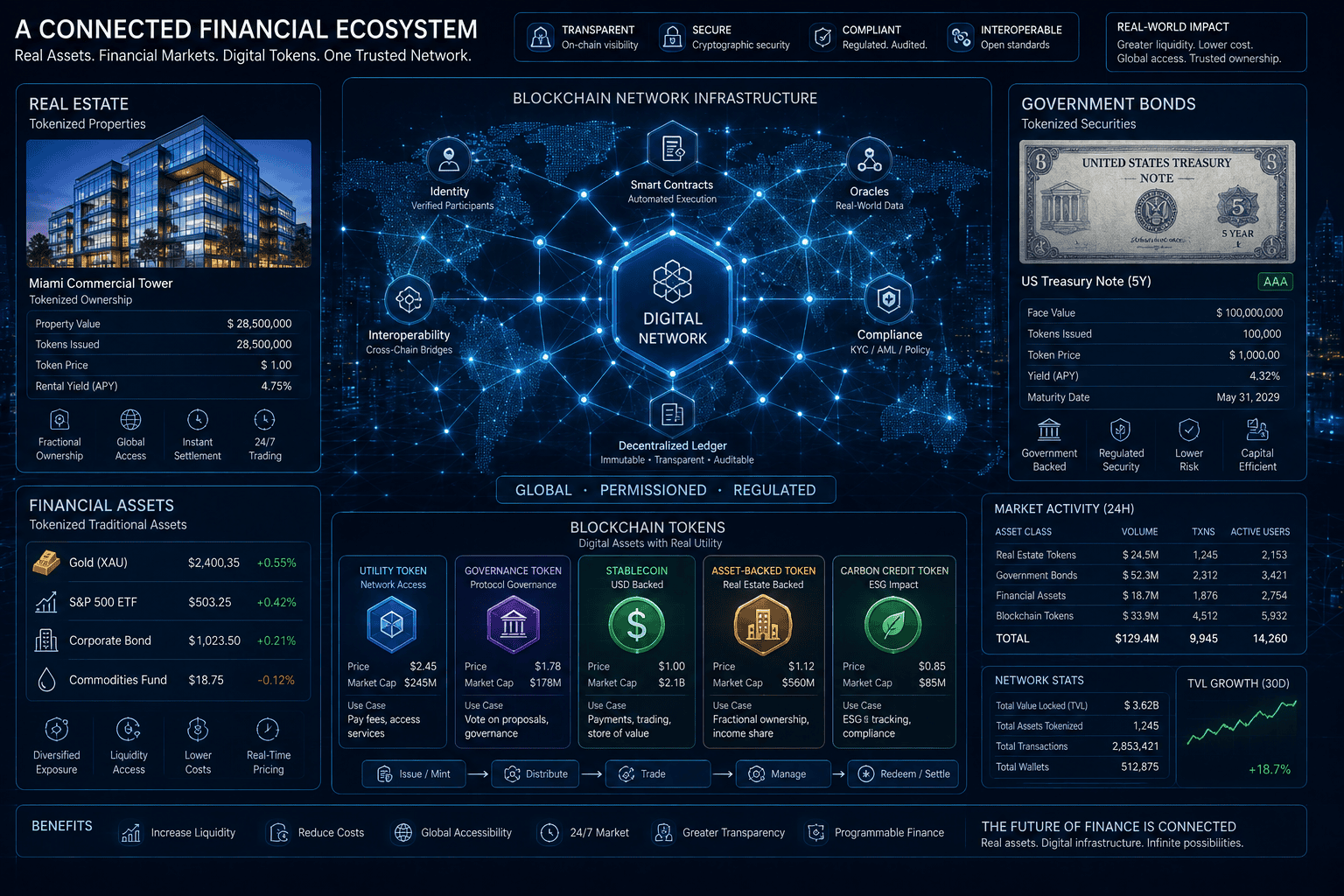
Tokenization could potentially simplify some of these processes.
The World Economic Forum identifies asset tokenization as one of the major developments shaping digital assets in 2026.
Coinbase’s 2026 institutional survey also found strong institutional interest in tokenization, with 64% of surveyed asset managers expressing interest in tokenizing assets.
However, tokenization doesn’t magically eliminate legal ownership questions.
A token is only useful if the legal rights represented by that token are clearly defined and enforceable.
5. Cryptocurrency and Traditional Finance Are Moving Closer Together
Crypto was initially presented by many people as an alternative to traditional finance.
Now something more complicated is happening.
Traditional financial institutions are increasingly exploring blockchain technology.
Banks, asset managers, payment companies, exchanges, and fintech businesses are investigating:
- Stablecoins
- Tokenized funds
- Digital custody
- Blockchain settlement
- Digital payments
- Tokenized deposits
- Crypto trading infrastructure
This doesn’t necessarily mean traditional finance is being replaced.
It may mean traditional finance is adopting selected blockchain technologies.
The IMF’s 2026 work on tokenized finance highlights the growing intersection of stablecoins, tokenized deposits, central-bank money, and other forms of tokenized financial claims.
This creates an interesting future.
Instead of:
Traditional finance vs crypto
we may increasingly see:
Traditional finance + blockchain infrastructure.
6. DeFi Is Becoming More Connected to Professional Finance
Decentralized finance, or DeFi, refers to financial applications built using blockchain-based smart contracts.
Common DeFi functions include:
- Lending
- Borrowing
- Trading
- Liquidity provision
- Derivatives
- Asset management
The original DeFi vision emphasized financial services without traditional intermediaries.
But the industry is evolving.
As institutional investors become more interested in digital assets, they are also exploring whether decentralized protocols can be used within professional financial environments.
This creates difficult questions.
For example:
- Who is responsible when a smart contract fails?
- How should compliance work?
- How do institutions manage private keys?
- How are sanctions and AML requirements handled?
- What happens during a protocol exploit?
- How should governance disputes be resolved?
Institutional DeFi therefore requires more than smart contracts.
It requires governance and risk-management infrastructure.
7. Crypto Payments Could Become More Practical
Cryptocurrency payments have been discussed for years.
But volatility has always created a problem.
If a merchant accepts Bitcoin and its value changes significantly between the sale and settlement, accounting and treasury management become complicated.
Stablecoins potentially solve part of this problem.
A merchant could theoretically receive a dollar-denominated stablecoin instead of a volatile cryptocurrency.
That creates a different payment model:
Customer
↓
Stablecoin payment
↓
Blockchain settlement
↓
Merchant or payment provider
↓
Bank account or digital treasury
This could be useful for international businesses.
A company operating in multiple countries may want faster cross-border settlement without waiting for conventional banking processes.
Coinbase’s 2026 institutional research found that 85% of surveyed institutions were already using or interested in using stablecoins for internal cash management and money movement.
That suggests stablecoins are moving beyond trading.
They are increasingly being considered for financial operations.
8. AI and Cryptocurrency Are Starting to Converge
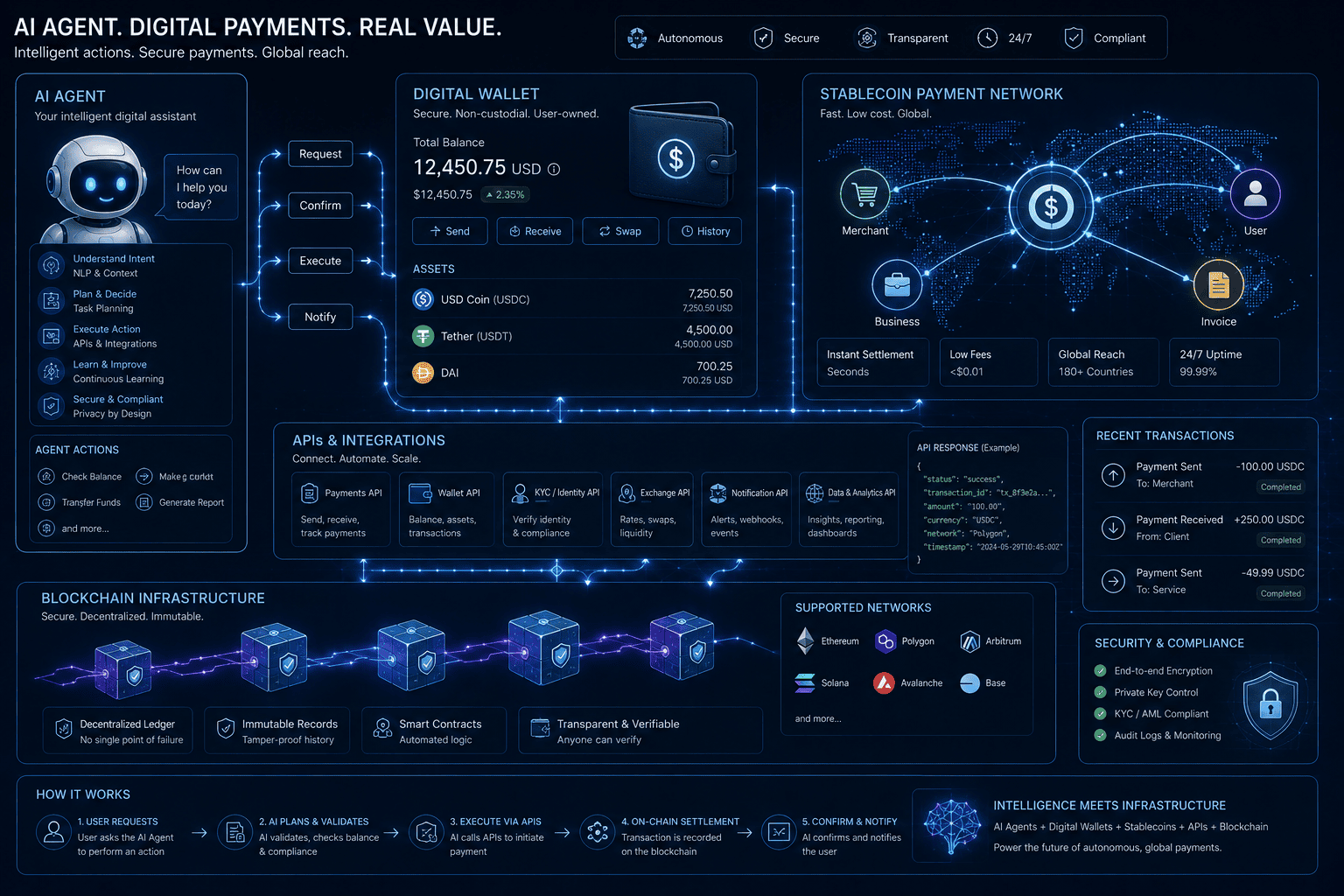
One of the more interesting emerging trends is the connection between AI agents and crypto payments.
Why would AI need cryptocurrency?
Because AI agents may eventually perform tasks that involve economic transactions.
Imagine an AI agent that can:
- Purchase software
- Pay for data
- Buy computing resources
- Pay another AI service
- Purchase an API request
- Receive payment for completing work
Traditional financial systems were largely designed around humans and businesses.
An autonomous software agent introduces a new type of economic participant.
Blockchain networks may be useful because they can support programmable transactions.
Stablecoins are especially interesting here because an AI agent generally wouldn’t want its operating budget to fluctuate like Bitcoin.
Example
Imagine:
AI agent
→ Finds required dataset
→ Verifies provider
→ Pays stablecoin
→ Downloads data
→ Performs analysis
→ Delivers result
This is still an emerging concept rather than a universally deployed business model.
But the combination of:
AI agents + digital wallets + stablecoins + APIs
could create new forms of machine-to-machine commerce.
9. Security and Self-Custody Remain Critical
One of the biggest mistakes beginners make with cryptocurrency is focusing entirely on price.
Crypto security is equally important.
If you control your own wallet, you may be responsible for protecting:
- Private keys
- Seed phrases
- Recovery methods
- Device security
- Transaction approvals
A cryptocurrency transaction generally cannot simply be reversed because you made a mistake.
This makes security fundamentally different from many traditional payment systems.
Common Risks
Phishing
A fake website may attempt to steal wallet credentials.
Fake Apps
Malicious software can imitate legitimate wallets.
Private-Key Theft
If someone obtains your private key, they may gain control over your assets.
Approval Attacks
A user may unknowingly grant a malicious smart contract permission to interact with assets.
Exchange Risk
Holding assets on a centralized exchange introduces counterparty and platform risk.
Social Engineering
Attackers may impersonate support staff, businesses, or people you know.
How to Improve Crypto Security
Use basic security practices.
Never share your seed phrase
A legitimate support representative should not need your wallet recovery phrase.
Verify transaction details
Check addresses and amounts carefully.
Use hardware wallets for significant holdings
For users with substantial long-term assets, hardware-based key management can provide additional protection.
Separate wallets
You don’t necessarily need to use one wallet for every purpose.
A low-value wallet can be used for experimental applications while long-term holdings remain isolated.
Avoid unknown links
Crypto phishing attacks often use links that imitate legitimate platforms.
Don’t trust guaranteed returns
If someone promises guaranteed high returns, treat it as a major warning sign.
10. Regulation Could Define the Next Phase of Crypto
Regulation has always been one of the biggest variables in cryptocurrency.
Different countries have taken different approaches.
Some encourage blockchain innovation.
Others emphasize strict consumer protection.
Some attempt to create specialized digital-asset rules.
In 2026, regulatory clarity is becoming one of the industry’s central themes.
The Coinbase institutional survey found that 65% of institutions planning to increase digital-asset holdings identified greater regulatory clarity as a key driver, while regulatory uncertainty remained a major concern.
This illustrates an important relationship:
Clear rules can encourage adoption.
But poorly designed rules can also discourage innovation.
Why Regulation Is Complicated
Crypto doesn’t fit neatly into traditional categories.
A digital asset can sometimes function like:
- Money
- An investment
- A utility token
- A payment instrument
- A governance mechanism
- A commodity-like asset
- A representation of another asset
That makes legal classification difficult.
Regulators therefore have to balance:
- Innovation
- Financial stability
- Consumer protection
- Competition
- Privacy
- Security
- Anti-money-laundering requirements
The result will likely be different across jurisdictions.
Bitcoin vs Stablecoins vs Tokenized Assets
These three areas are sometimes discussed together, but they serve different purposes.
| Asset type | Primary role |
|---|---|
| Bitcoin | Digital asset and decentralized monetary network |
| Stablecoin | Digital representation of stable-value money |
| Tokenized asset | Blockchain representation of another financial or real-world asset |
Bitcoin’s value can fluctuate significantly.
A stablecoin attempts to maintain a stable reference value.
A tokenized asset derives its economic meaning from the underlying asset or legal claim.
Understanding this difference is important for anyone entering cryptocurrency.
Is Cryptocurrency Still Worth Learning in 2026?
Yes—but learning about cryptocurrency does not mean you need to buy cryptocurrency.
Blockchain technology affects:
- Payments
- Finance
- Software
- AI
- Cybersecurity
- Digital identity
- Asset management
- International commerce
Understanding the technology can help you recognize opportunities and risks.
A beginner should first learn:
- What blockchain is.
- How wallets work.
- What private keys are.
- How transactions work.
- What stablecoins are.
- How exchanges work.
- What smart contracts are.
- What DeFi means.
- What tokenization means.
- How crypto scams work.
Only after understanding those concepts should someone consider whether digital assets belong in their personal financial strategy.
Cryptocurrency for Freelancers and Online Businesses
Cryptocurrency can also be relevant to freelancers.
A freelancer working internationally may encounter difficulties with:
- Currency conversion
- Payment delays
- International transfer fees
- Banking restrictions
- Weekend settlement
- Payment processor availability
Stablecoins could potentially provide another payment option.
For example:
Client
→ Pays stablecoin
→ Freelancer receives payment
→ Freelancer holds stablecoin
→ Converts to local currency when needed
However, freelancers should understand their local tax and reporting requirements before accepting digital assets.
Crypto payments are not automatically tax-free or exempt from financial reporting.
Rules vary significantly by jurisdiction.
Cryptocurrency and WordPress Websites
Website owners can also integrate cryptocurrency-related functionality.
Potential applications include:
- Crypto payment options
- Wallet authentication
- Token-gated content
- Blockchain-based memberships
- Digital collectibles
- Stablecoin payments
- Web3 applications
But adding a “Connect Wallet” button does not automatically make a website Web3.
A useful implementation should solve an actual user problem.
For example, a membership website could potentially use blockchain credentials for access.
An international digital service could potentially accept stablecoin payments.
A creator could use tokenized assets for a digital community.
The technology should follow the business use case.
Not the other way around.
Common Cryptocurrency Mistakes Beginners Should Avoid
Mistake 1: Buying Because Someone Promised a Huge Return
Nobody can guarantee cryptocurrency profits.
Mistake 2: Investing Money You Cannot Afford to Lose
Crypto prices can move sharply.
Mistake 3: Ignoring Security
A profitable portfolio is meaningless if access is stolen.
Mistake 4: Chasing Every New Token
Thousands of crypto assets exist, and not all have durable utility.
Mistake 5: Confusing Technology With Investment Quality
A good technology does not automatically make a token a good investment.
Mistake 6: Using Excessive Leverage
Leverage can magnify losses as well as gains.
Mistake 7: Believing Social-Media Influencers Without Verification
Crypto markets contain significant amounts of promotional content.
Always investigate independently.
What Could Happen Next?
The cryptocurrency industry could develop in several directions.
Scenario 1: Financial Integration
Blockchain becomes a behind-the-scenes infrastructure layer for:
- Payments
- Settlement
- Asset issuance
- Custody
Consumers may use blockchain without even realizing it.
Scenario 2: Stablecoin Expansion
Stablecoins become increasingly important for:
- International commerce
- Remittances
- Treasury management
- Digital payments
Scenario 3: Tokenized Markets
More traditional financial assets move onto blockchain networks.
Scenario 4: Continued Crypto Volatility
Bitcoin and other digital assets remain highly speculative despite institutional adoption.
Scenario 5: Regulatory Fragmentation
Different jurisdictions establish incompatible frameworks, creating compliance and market-access challenges.
All five could happen simultaneously.
That’s why cryptocurrency shouldn’t be viewed as a single technology.
It is an ecosystem.
How to Research a Cryptocurrency Project
Before considering any cryptocurrency project, investigate several areas.
1. Problem
What problem does the project solve?
2. Technology
Does the technology actually work?
3. Team
Who develops it?
4. Tokenomics
How are tokens created and distributed?
5. Utility
Does the token have a genuine purpose?
6. Security
Has the system been audited?
Are there known vulnerabilities?
7. Liquidity
Can assets actually be bought or sold efficiently?
8. Governance
Who controls important decisions?
9. Regulation
Could the project’s activities face regulatory restrictions?
10. Community
Is the community focused on development or simply price speculation?
This framework doesn’t guarantee success.
It simply helps reduce the chance of making a decision based purely on hype.
The Future of Cryptocurrency
The future of cryptocurrency may look very different from its past.
The industry started with a powerful idea:
Digital money without a central authority.
It evolved into a much broader ecosystem involving:
- Smart contracts
- Decentralized finance
- Stablecoins
- NFTs
- Tokenized assets
- Blockchain gaming
- Digital identity
- Institutional custody
- AI agents
- Programmable payments
The next phase may be less visible.
Instead of people constantly talking about “crypto,” blockchain technology may become embedded inside ordinary financial applications.
A customer may send a payment without knowing whether blockchain was involved.
An investment fund may issue tokenized shares.
A company may use stablecoins for international treasury operations.
An AI agent may pay another service automatically.
A financial institution may settle tokenized assets on a blockchain.
In that world, blockchain becomes infrastructure rather than a separate category.
That is potentially the biggest change of all.
Frequently Asked Questions
What is the biggest cryptocurrency trend in 2026?
There isn’t one universal winner, but stablecoins, institutional adoption, tokenization, regulatory development, and blockchain-based financial infrastructure are among the most significant trends.
Is Bitcoin still relevant in 2026?
Yes. Bitcoin remains the largest and best-known cryptocurrency and is increasingly accessible through institutional investment infrastructure. However, relevance does not eliminate price volatility or investment risk.
What are stablecoins used for?
Stablecoins can be used for trading, payments, transfers, settlement, treasury management, and other forms of digital money movement.
Are stablecoins risk-free?
No. Stablecoins can face reserve, issuer, liquidity, operational, regulatory, cybersecurity, and market risks. The BIS has specifically highlighted structural weaknesses and financial-stability concerns associated with broader stablecoin adoption.
What is tokenization in cryptocurrency?
Tokenization involves representing an asset or financial claim through blockchain-based tokens. Potential examples include bonds, funds, real estate interests, and other financial assets.
Is cryptocurrency legal?
Legality and regulatory treatment vary by country and by the type of digital asset or activity involved. Users should check the rules applicable in their jurisdiction.
Can freelancers receive payments in cryptocurrency?
In some jurisdictions and business contexts, yes. Stablecoins may be particularly relevant for international payments, but freelancers should understand applicable tax, accounting, AML, and payment regulations.
Is cryptocurrency a good investment?
There is no universal answer. Cryptocurrency can be highly volatile and speculative. Anyone considering an investment should independently evaluate risk, financial circumstances, regulation, security, and diversification.
Will cryptocurrency replace banks?
It is unlikely that one simple outcome can be assumed. A more plausible development is greater integration between blockchain infrastructure and traditional financial institutions.
Conclusion
Cryptocurrency in 2026 is becoming more complicated—and arguably more interesting—than the simple idea of buying and selling digital coins.
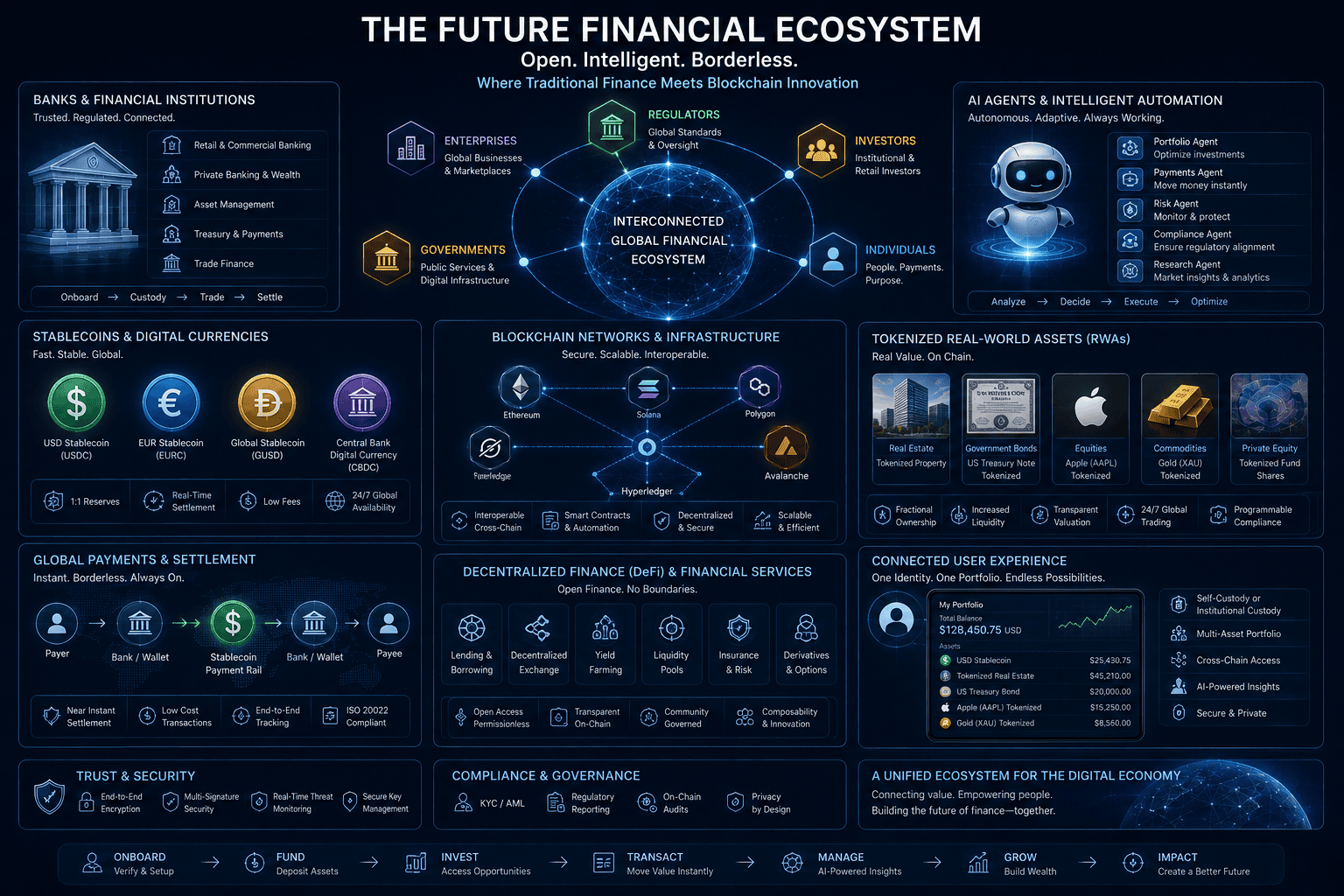
Bitcoin remains central to the ecosystem, but the industry’s growth is increasingly connected to stablecoins, tokenization, institutional finance, payments, DeFi, AI, and blockchain infrastructure.
Stablecoins may become one of the most practical applications of blockchain technology because they attempt to combine digital transferability with relatively stable value.
Tokenization could change how financial assets are issued, transferred, and settled.
Institutional adoption is creating demand for stronger custody, compliance, governance, and risk-management systems.
AI introduces another potentially transformative possibility: software agents that can interact with programmable financial systems.
At the same time, serious risks remain.
Crypto assets can lose value.
Smart contracts can contain vulnerabilities.
Wallets can be compromised.
Stablecoin issuers can face operational and regulatory challenges.
Regulatory frameworks can change.
And scams remain widespread.
Therefore, the smartest way to approach cryptocurrency is neither blind enthusiasm nor automatic rejection.
It is understanding.
Learn how the technology works.
Understand what a particular asset actually represents.
Separate infrastructure from speculation.
Evaluate security.
Understand regulation.
And never assume that a promising technology guarantees a profitable investment.
The next chapter of cryptocurrency may ultimately have less to do with people trading tokens and more to do with blockchain becoming part of the financial infrastructure people already use.
That is why 2026 could prove to be an important year for digital assets—not necessarily because every cryptocurrency will succeed, but because the underlying technology is increasingly being tested against real financial problems.