
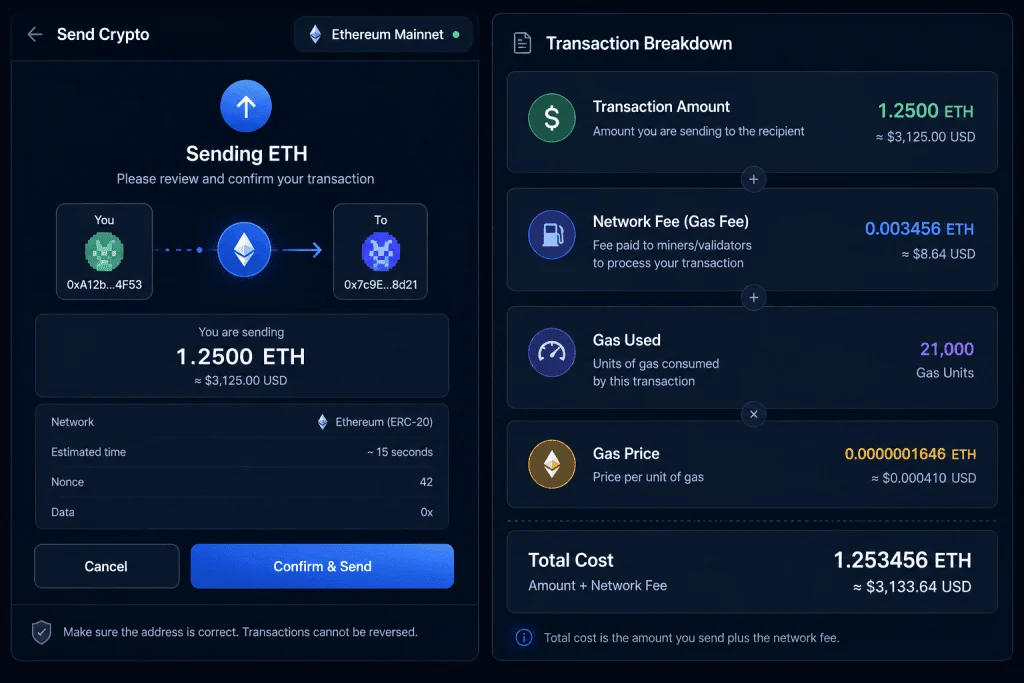
What Are Crypto Gas Fees? A Complete Guide to Blockchain Transaction Costs
- by Muhammad Raza
- 0 Comments
- 16 minutes read
- 43 Views
If you have ever sent cryptocurrency, swapped a token, interacted with a decentralized application, or purchased an NFT, you may have noticed an additional charge attached to the transaction.
This charge is often called a gas fee.
For someone new to cryptocurrency, gas fees can be confusing.
You might ask:
- Why do I have to pay a fee?
- Who receives the fee?
- Why does the fee change?
- Why did my transaction cost more than expected?
- Why can the same blockchain be cheap at one moment and expensive later?
- Why did I pay a fee even when a transaction did not complete?
These questions become easier to understand once you recognize that public blockchains are decentralized networks operated by computers that must process and validate transactions.
Those computers require incentives.
Transaction fees are one part of that economic system.
However, not every cryptocurrency network uses the word gas in exactly the same way. Ethereum is the best-known example of a blockchain where computation and transaction resources are measured through gas. Other networks use different fee mechanisms and terminology.
Ethereum’s official documentation explains that gas measures the computational effort required to execute operations on the network. The amount of ETH required for a transaction depends on the gas used and the applicable gas price. (ethereum.org)
Understanding crypto gas fees can help you estimate transaction costs, choose appropriate transaction times, avoid unnecessary spending, and better understand how decentralized networks function.
This guide explains the concept from the ground up.
What Is a Crypto Gas Fee?
A crypto gas fee is a transaction cost associated with using certain blockchain networks.
On Ethereum, gas is essentially a unit used to measure computational work.
A simple transaction may require one amount of computational work.
A more complicated smart-contract interaction may require considerably more.
For example:
Simple transfer
Sending ETH from one wallet to another.
Smart-contract interaction
Swapping tokens through a decentralized exchange.
Complex transaction
Interacting with a smart contract that performs multiple operations.
The more computation required, the more gas may be consumed.
The important distinction is:
Gas measures computational work, while the fee is the amount of cryptocurrency paid for that work.
This distinction helps explain why a transaction involving a small amount of cryptocurrency can sometimes have a relatively large network fee.
Why Do Blockchains Charge Transaction Fees?
A decentralized blockchain needs a mechanism for managing limited network resources.
Every transaction consumes resources.
The network has limited:
- Block space
- Computational capacity
- Validation capacity
- Data storage resources
Without an economic cost, users could potentially submit enormous numbers of transactions and overload the network.
Transaction fees help create a pricing mechanism for those resources.
They can also compensate network participants who process and secure transactions.
Ethereum documentation explains that gas helps prevent spam and ensures that computational resources are priced. (ethereum.org)
So when you pay a network fee, you are not simply paying a random charge.
You are paying for the use of scarce blockchain resources.
Gas Is Not the Same as a Cryptocurrency Transaction
This distinction is important.
Suppose you send ETH.
The transaction may require a certain quantity of gas.
The fee is then calculated from:
Gas Used × Gas Price
The resulting cost is paid in the network’s applicable fee currency.
On Ethereum, gas fees are denominated in ETH.
However, the exact fee structure can vary across networks.
This is why you should always check the specific blockchain you are using rather than assuming every network calculates fees identically.
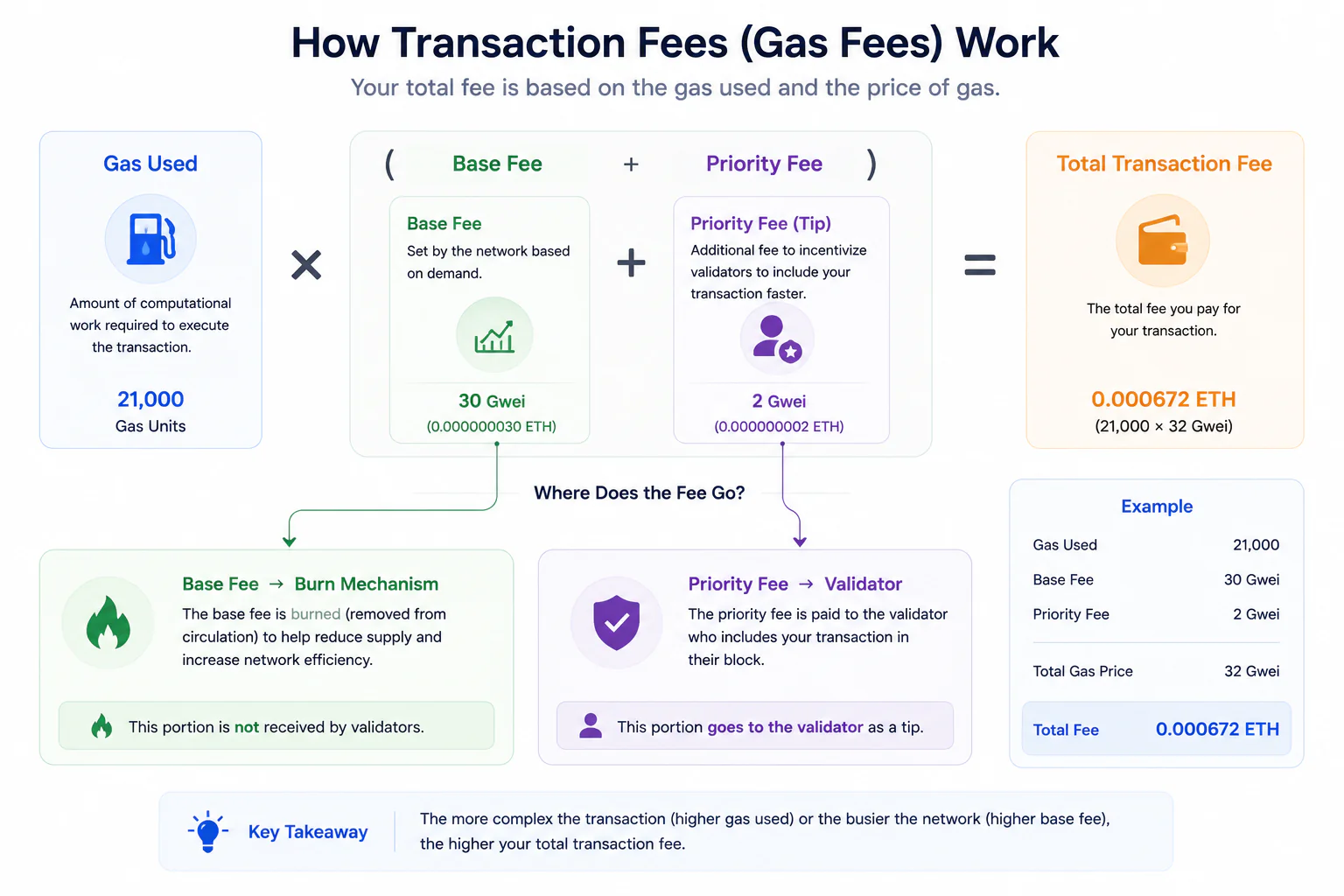
How Ethereum Gas Fees Work
Ethereum’s fee model has evolved over time.
One important change occurred with EIP-1559, which introduced a base fee and a priority fee structure.
The base fee is determined by network conditions.
A priority fee, commonly called a tip, can be added to encourage validators to include a transaction.
Ethereum’s documentation describes the basic structure as:
Total Fee = Gas Used × (Base Fee + Priority Fee)
The base fee is burned, while the priority fee goes to the validator. (ethereum.org)
This mechanism is different from simply having one fixed transaction price.
What Is the Base Fee?
The base fee represents the minimum amount of gas price required for a transaction to be included under Ethereum’s fee mechanism.
It changes based on network demand.
When blocks are relatively full, the base fee can increase.
When demand decreases, it can decrease.
This means the cost of using Ethereum is not fixed.
You may see significantly different estimated fees at different times.
This is one reason checking the current network conditions before submitting a transaction can be useful.
What Is the Priority Fee?
The priority fee is an additional amount paid to the validator.
It is commonly described as a tip.
Users can use the priority fee to indicate how strongly they want their transaction prioritized.
However, simply increasing the priority fee does not eliminate the base fee.
The final cost depends on the amount of gas used and the applicable fee components.
Why Do Gas Fees Change?
Gas fees change primarily because blockchain demand changes.
Imagine a highway.
When traffic is light, moving around is easy.
When thousands of vehicles arrive simultaneously, congestion increases.
Blockchain networks experience a similar economic effect.
When many users want to execute transactions at the same time, competition for block space can increase.
This can lead to higher fees.
Common events that can increase network demand include:
- Popular token launches
- NFT activity
- Major market movements
- DeFi activity
- High trading volume
- New protocol launches
- Network-wide events
Not every event affects every blockchain in the same way.
But demand is an important factor.
Does the Amount of Crypto You Send Determine the Gas Fee?
Not necessarily.
This is one of the most common misconceptions.
If you send $10 worth of ETH, the computational work may be similar to sending $10,000 worth of ETH through the same basic transaction type.
The network generally charges based on resource usage, not simply on the dollar value being transferred.
A basic transfer and a complex smart-contract interaction can therefore have very different fees.
This is why:
Transaction value ≠ computational cost
Simple Transfer vs Smart Contract
Consider two transactions.
Transaction A
Alice sends ETH to Bob.
This is relatively straightforward.
Transaction B
Alice interacts with a smart contract that:
- Approves a token
- Executes a swap
- Updates contract state
- Transfers assets
- Emits events
Transaction B can require more computational work.
Therefore, it may consume more gas.
The exact amount depends on the specific transaction and contract implementation.
What Happens If a Transaction Fails?
This is another important issue.
You may wonder:
“If my transaction failed, why did I still pay a fee?”
The reason is that network participants may still have performed computational work processing the transaction.
If a smart contract execution consumes gas before reaching a failure condition, the resources used do not necessarily become free simply because the final result was unsuccessful.
Therefore, failed transactions can still cost money.
This is one reason users should carefully review contract interactions and transaction details before approving them.
Why Wallets Show Estimated Gas Fees
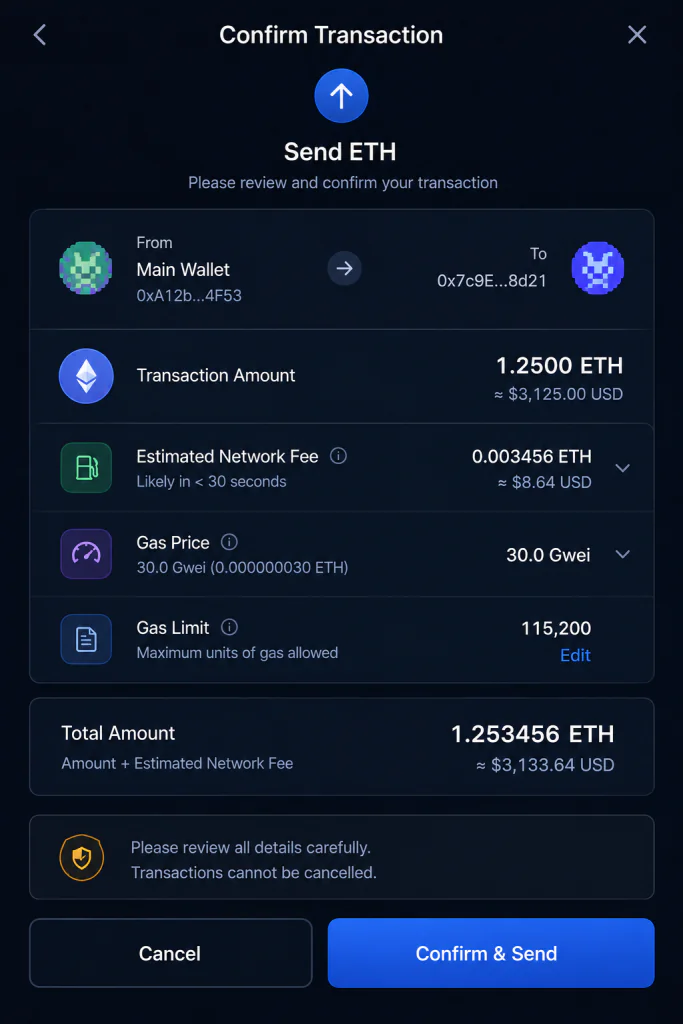
Cryptocurrency wallets often estimate the transaction fee before you confirm.
The estimate can depend on:
- Current network conditions
- Transaction type
- Expected gas consumption
- Current fee market
- Wallet configuration
An estimate is not necessarily a permanent price.
Network conditions can change between estimation and confirmation.
This is especially relevant during periods of high activity.
What Is a Gas Limit?
A gas limit represents the maximum amount of gas that a transaction is allowed to consume.
For simple transactions, the required amount may be relatively predictable.
Smart-contract interactions can be more complicated.
The gas limit is not necessarily the same thing as the final gas fee.
A transaction may have a gas limit of a certain amount but consume less than that.
The distinction is important:
Gas limit = maximum allowed computational resource
Gas used = actual computational resource consumed
The final fee is based on gas actually used, subject to the network’s rules.
Can You Reduce Crypto Gas Fees?
Sometimes, yes.
You cannot control the blockchain’s entire fee market, but you can make choices that reduce unnecessary costs.
Here are practical approaches.
1. Check Network Conditions Before Transacting
If your transaction is not urgent, compare current fee conditions before submitting it.
Network activity changes throughout the day.
You may find that a transaction costs less when demand is lower.
However, do not assume there is one universal “cheap hour.”
Blockchain activity varies by network and global user behavior.
2. Avoid Unnecessary Transactions
Every on-chain transaction can cost money.
Before submitting one, ask:
Does this actually need to happen on-chain?
For example, repeatedly moving small amounts between wallets may create unnecessary fees.
Planning transactions can help reduce the number of times you interact with the network.
3. Batch Operations When Supported
Some systems support batching multiple operations into fewer transactions.
Instead of executing several separate actions, a compatible system may combine them.
Whether this saves money depends on the specific blockchain and application.
Batching can be especially useful for users managing multiple operations.
4. Use Layer-2 Networks Where Appropriate
Ethereum has a broader scaling ecosystem that includes Layer-2 networks.
Layer-2 systems process transactions using additional infrastructure while relying on Ethereum for security or settlement according to their particular design.
They can often provide lower transaction costs for users compared with performing the same activity directly on Ethereum mainnet.
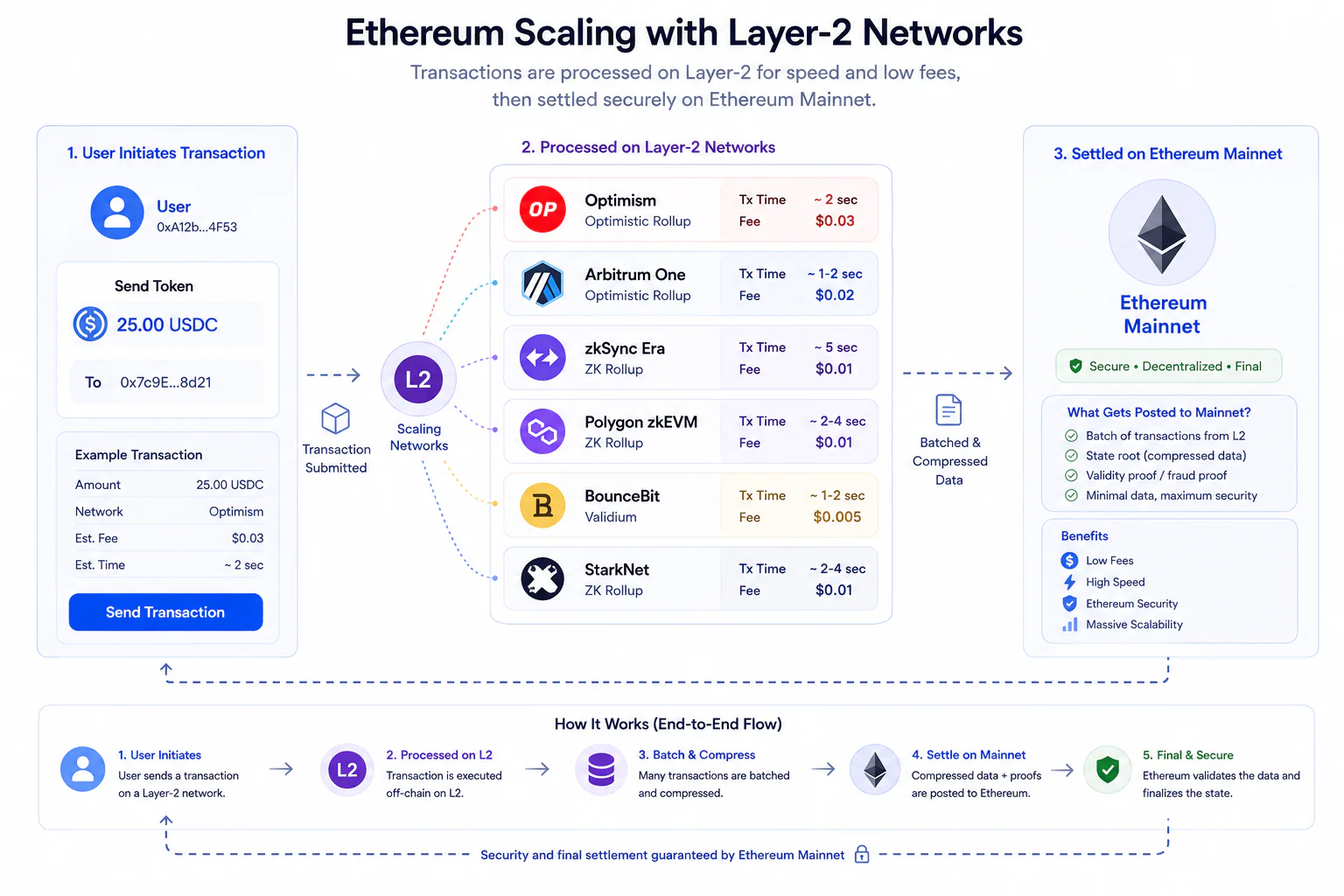
However, Layer-2 networks are not identical.
Users should understand:
- Supported assets
- Bridge requirements
- Withdrawal processes
- Application compatibility
- Security assumptions
- Fees
Before moving funds.
5. Compare Networks Carefully
Different blockchains can have different fee structures.
If an application supports multiple networks, users may have choices.
But lower fees should not be the only factor.
Consider:
- Security model
- Decentralization
- Liquidity
- Application support
- Asset availability
- Bridge risk
- Network reliability
A cheaper transaction is not automatically a better transaction.
6. Avoid Blindly Increasing Fees
When a wallet recommends a fee, users may be tempted to increase it significantly.
That is not always necessary.
For normal transactions, a moderate fee may be sufficient.
For time-sensitive transactions, users may choose a higher priority fee depending on the network’s current conditions.
The correct choice depends on urgency and the blockchain’s fee mechanism.
7. Review Smart Contracts Before Confirming
Complex transactions can consume more gas.
Before clicking “Confirm,” review:
- Contract address
- Network
- Token
- Transaction type
- Estimated fee
- Amount
- Permissions being requested
This does not guarantee safety.
But it can help identify obvious mistakes.
Gas Fees and Smart Contract Approvals
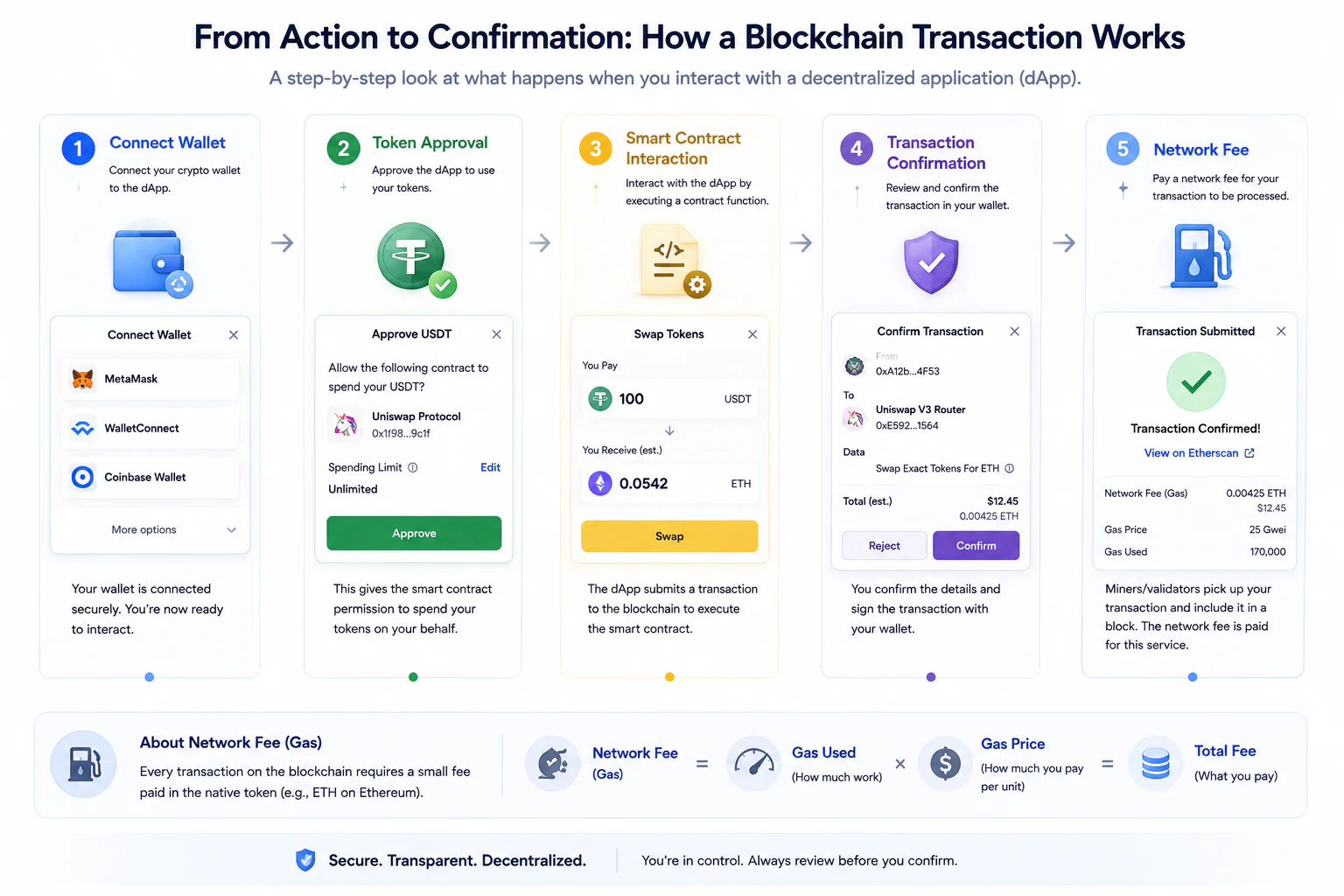
Token approvals are an important source of blockchain transactions.
Suppose you want to use a token in a decentralized application.
The application may require an approval transaction allowing a smart contract to interact with your tokens.
That approval can itself require a network fee.
You may then need another transaction to perform the actual swap or operation.
This means one user action from a website can sometimes involve multiple blockchain transactions.
Understanding this can make wallet fee estimates less confusing.
Gas Fees on Other Blockchains
The term “gas” is strongly associated with Ethereum and Ethereum-compatible environments.
But cryptocurrency networks use different fee systems.
For example, Bitcoin uses transaction fees related to the amount of transaction data and competition for block space.
Other networks use their own mechanisms.
Therefore, avoid saying:
“Every blockchain uses Ethereum-style gas.”
That is incorrect.
A better statement is:
“Many blockchain ecosystems use transaction fees, but the way those fees are calculated can differ significantly.”
This distinction becomes important as users move between networks.
Why Bitcoin Fees Are Different
Bitcoin does not use Ethereum’s gas model.
Bitcoin transaction fees are generally influenced by transaction size and the fee rate users are willing to pay relative to available block space.
A transaction with many inputs can require more data than a simple transaction.
During periods of high demand, users may compete for limited block space.
This creates a fee market.
So although Bitcoin and Ethereum both have transaction fees, their underlying fee mechanisms are different.
What Are Network Congestion and Block Space?
A blockchain block has limits.
Only a certain amount of data or computational work can be included.
When demand exceeds immediately available capacity, users compete for inclusion.
This is commonly described as congestion.
The economic result can be higher fees.
Think of block space as limited digital real estate.
When many users want access simultaneously, the price of that scarce resource can increase.
Why Gas Fees Matter for Small Transactions
Suppose you want to move a tiny amount of cryptocurrency.
If the network fee is significant relative to the amount being transferred, the transaction may not make economic sense.
For example:
Transfer: $5
Network fee: $2
The fee represents a large percentage of the transaction.
But for:
Transfer: $5,000
Network fee: $2
The same fee may be relatively insignificant.
This is why users should consider transaction fees relative to the amount being moved.
Gas Fees and DeFi
Decentralized finance applications can involve more complex smart-contract interactions than simple wallet transfers.
Examples include:
- Token swaps
- Lending
- Borrowing
- Liquidity provision
- Staking
- Yield strategies
- Collateral management
A single DeFi strategy may require multiple transactions.
Users should therefore understand the total transaction cost rather than looking only at the expected financial return.
A strategy that appears profitable before network fees may look very different after transaction costs.
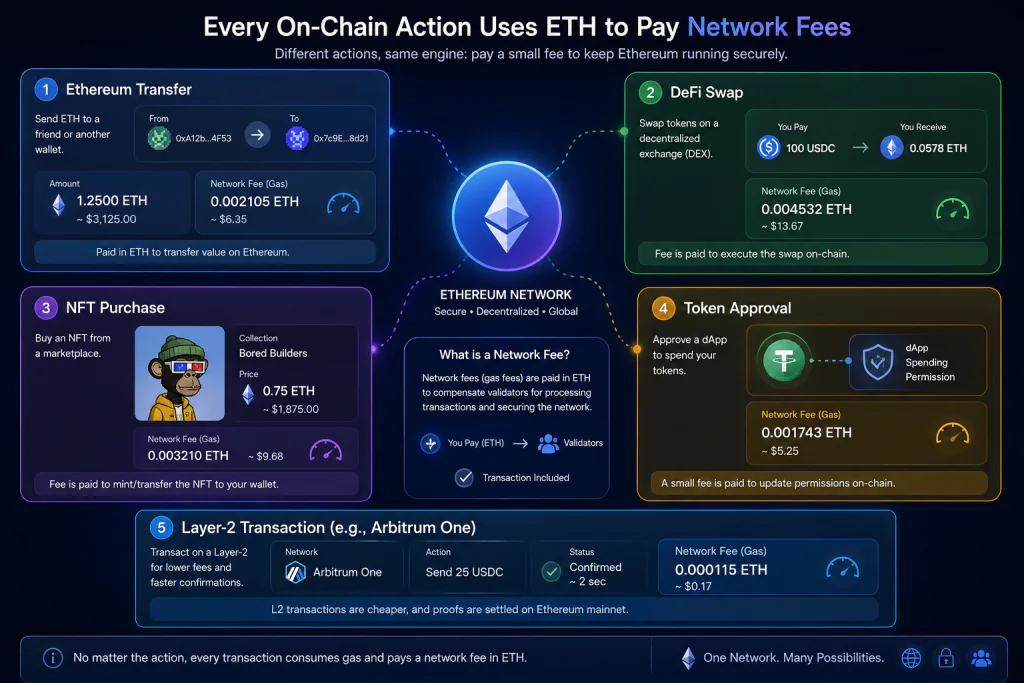
Gas Fees and NFTs
NFT activity can also involve smart contracts.
Depending on the application, users may need to pay fees for:
- Minting
- Buying
- Selling
- Transferring
- Approving tokens
- Interacting with marketplace contracts
During periods of intense NFT activity, network demand can increase.
This can affect the cost of unrelated transactions on the same network.
Can Gas Fees Be Zero?
You may sometimes see applications advertising “zero gas” or “gasless” transactions.
This does not necessarily mean the blockchain itself has no cost.
Instead, another party may be paying the network fee.
For example, an application could sponsor transactions through a relayer or another infrastructure mechanism.
The important question is:
Who is actually paying the underlying network cost?
Always look beyond the marketing phrase.
Why Gas Fee Estimates Can Be Wrong
A wallet estimates the required fee before a transaction executes.
But smart-contract behavior can sometimes vary.
An estimate may differ from actual usage because:
- Contract state changes
- Network conditions change
- The transaction path changes
- The contract behaves differently under current conditions
This is why estimated fees should be treated as estimates rather than absolute guarantees.
How to Read a Blockchain Transaction
When reviewing a transaction explorer, you may encounter terms such as:
Transaction Hash
A unique identifier for the transaction.
Status
Whether the transaction succeeded or failed.
Block
The block containing the transaction.
Gas Used
The computational resources consumed.
Gas Price
The applicable gas price.
Transaction Fee
The resulting network fee.
From
The sending address.
To
The receiving address or contract.
Learning these terms makes blockchain activity much easier to understand.
A Simple Example of Gas Fee Calculation
Suppose a hypothetical Ethereum transaction uses:
Gas Used: 21,000
Base Fee: 20 gwei
Priority Fee: 2 gwei
The effective gas price would be:
20 + 2 = 22 gwei
The transaction fee would therefore be:
21,000 × 22 gwei
Since 1 ETH equals 1,000,000,000 gwei, the result can then be converted into ETH.
This example is simplified for educational purposes.
Actual transaction costs depend on the network’s current fee conditions and the gas actually consumed.
Gwei Explained
Ethereum users frequently encounter gwei when discussing gas.
Gwei is a denomination of ETH.
One ETH equals:
1,000,000,000 gwei
Using gwei makes small gas prices easier to read.
Instead of saying:
0.000000022 ETH
a system can express the same unit relationship more conveniently as:
22 gwei
Understanding gwei is useful when reading Ethereum fee estimates.
Should You Wait for Lower Gas Fees?
Sometimes waiting can make sense.
If a transaction is not urgent, you can monitor network conditions and submit it when the fee environment is more favorable.
But there is no guarantee that waiting will reduce the cost.
Market activity can change unexpectedly.
For urgent transactions, the cost of delay may be more important than the potential fee savings.
The right decision depends on:
- Transaction urgency
- Network conditions
- Transaction value
- Potential market movement
- Application requirements
A Practical Gas Fee Checklist
Before confirming an on-chain transaction:
1. Check the network
Are you using the intended blockchain?
2. Check the asset
Are you sending or interacting with the correct token?
3. Review the recipient
Verify the destination address or contract.
4. Review the estimated fee
Make sure the cost is acceptable.
5. Understand the transaction
Know whether you are transferring, swapping, approving, staking, or performing another action.
6. Check urgency
Does this transaction need to happen immediately?
7. Confirm
Only approve after reviewing the details.
Common Crypto Gas Fee Mistakes
Confusing Gas With the Transaction Fee
Gas measures computational work; the fee is the monetary cost associated with that work.
Assuming Every Blockchain Uses the Same System
Different networks have different fee models.
Ignoring Smart Contract Complexity
Complex interactions may consume more resources.
Looking Only at the Crypto Amount
The network fee can be independent of the value transferred.
Assuming a Failed Transaction Costs Nothing
Computational work can still have a cost.
Chasing the Lowest Possible Fee
An extremely low fee may affect transaction inclusion depending on the network.
Ignoring Layer-2 Options
If your application supports an appropriate Layer-2 network, it may provide a different cost structure.
Trusting Every “Gasless” Claim
Someone may simply be paying the fee on your behalf.
Frequently Asked Questions
What are crypto gas fees?
Crypto gas fees are transaction costs associated with using blockchain networks that charge for computational or network resources. Ethereum is the most well-known example of a blockchain using a gas-based fee system.
Why are gas fees so expensive?
Fees can increase when network demand is high and users compete for limited block space or computational capacity.
Who receives Ethereum gas fees?
Under Ethereum’s current fee mechanism, the base fee is burned while the priority fee is paid to the validator. (ethereum.org)
Does sending more crypto mean paying more gas?
Not necessarily. A basic transaction’s gas requirement is generally related to the computational work involved rather than simply the monetary value being transferred.
Can I avoid crypto gas fees?
You generally cannot eliminate the underlying network cost of an on-chain transaction, but you may reduce costs by choosing appropriate transaction times, supported Layer-2 networks, batching methods, or other fee-efficient approaches.
Why did my crypto transaction fail but still charge a fee?
A failed transaction can still consume computational resources before the failure occurs, so a network fee may still be charged.
What is gwei?
Gwei is a denomination of ETH commonly used when expressing Ethereum gas prices. One ETH equals one billion gwei.
Are Bitcoin and Ethereum fees the same?
No. Bitcoin and Ethereum use different transaction-fee mechanisms.
Are gas fees fixed?
No. Fee conditions can change based on network demand and the type of transaction.
Should I always choose the lowest fee?
Not necessarily. The appropriate fee depends on urgency, network conditions, and the transaction type.
Final Thoughts
Understanding crypto gas fees is an important part of becoming comfortable with blockchain technology.
A network fee is not simply an arbitrary charge added to your transaction.
It reflects the cost of using limited blockchain resources.
Ethereum uses gas to measure computational work, while its fee mechanism combines components such as the base fee and priority fee. Other blockchain networks use different systems, so users should always understand the specific network they are using.
The most practical lesson is simple:
Check the network, understand the transaction, review the estimated fee, and avoid unnecessary on-chain activity.
If a transaction is not urgent, comparing current network conditions may help.
If an application supports a suitable Layer-2 network, that may provide another option.
And when interacting with smart contracts, remember that a simple-looking button on a website can trigger a much more complicated blockchain transaction underneath.
As cryptocurrency adoption continues, understanding the economics behind transaction fees can help users make better decisions.
The more you understand what you are actually paying for, the easier it becomes to use blockchain networks responsibly.