How to Get Your First Freelance Client on Fiverr and Upwork
- by Muhammad Raza
- 0 Comments
- 15 minutes read
- 57 Views
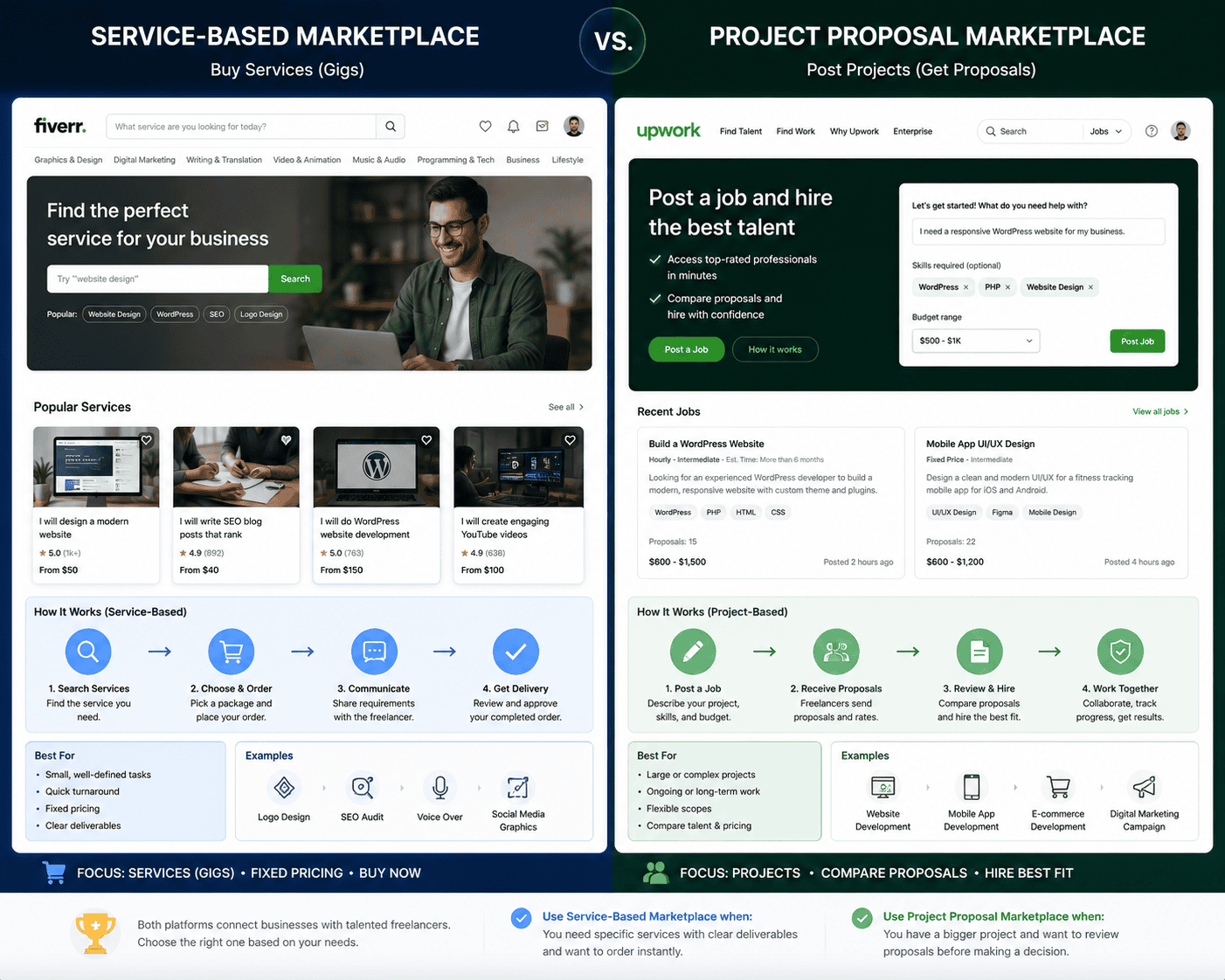
Getting your first freelance client on Fiverr and Upwork starts with a clear service, strong proof of your skills, and a focused client-acquisition strategy.
You do not need years of platform history to compete. You need an offer that is easy to understand, a portfolio that demonstrates what you can do, and proposals that address the client’s actual problem.
This guide explains how to choose between Fiverr and Upwork, build a credible profile and portfolio, write better proposals, price your first projects, avoid common beginner mistakes, and turn your first client into a foundation for repeat freelance work.
Build a Skill-Based Freelance Offer
One of the biggest beginner mistakes is trying to sell everything.
A profile that says:
“I do websites, graphic design, SEO, video editing, data entry, content writing, social media, and marketing.”
does not communicate a strong specialization.
Instead, create a clear offer.
For example:
WordPress Landing Page Designer
or:
SEO Blog Writer for Technology Websites
or:
Short-Form Video Editor for Social Media Brands
or:
Virtual Assistant for E-Commerce Businesses
Specific positioning helps clients quickly understand what you do.
You can still offer additional services later.
But your primary service should be easy to understand.
Choose a Problem, Not Just a Skill
Clients generally do not wake up thinking:
“I need someone who knows Canva.”
They think:
“I need professional social media graphics for my business.”
They do not necessarily think:
“I need someone who knows WordPress.”
They may think:
“My website looks outdated and I need a professional landing page.”
This difference matters.
Instead of marketing your technical skill alone, connect the skill to an outcome.
Weak Positioning
“I am a graphic designer.”
Better Positioning
“I create clean social media graphics for small businesses.”
Weak Positioning
“I know WordPress.”
Better Positioning
“I build responsive WordPress landing pages for service businesses.”
The second versions make the service easier to understand.
Create a Portfolio Before You Have Clients
This is one of the most important strategies for beginners.
You do not necessarily need paid clients before creating examples of your work.
You can create sample projects.
Suppose you want to become a WordPress designer.
Create three sample websites:
- A restaurant website
- A consulting business website
- A local service business website
Clearly label them as sample or concept projects.
Do not pretend they were paid client projects.
The purpose is to demonstrate your ability.
Similarly, if you want to become a content writer, create:
- A technology article
- A business article
- A product comparison
- A tutorial
If you want to become a video editor, create sample edits.
If you want to become a graphic designer, create branding concepts.
Your portfolio answers the client’s biggest question:
“Can this freelancer actually do the work?”

Make Your Portfolio About Results
A portfolio should not simply display work.
Explain the thinking behind it.
For every sample project, include:
Project
What did you create?
Goal
What problem was it designed to solve?
Approach
What decisions did you make?
Tools
What software or technology did you use?
Result
What improved or what was the intended outcome?
For a hypothetical project, be transparent.
Instead of saying:
“This website increased sales by 40%.”
say:
“This concept was designed with a simplified navigation structure and stronger calls to action to demonstrate how the user journey could be improved.”
Never invent performance data.
Optimize Your Fiverr Profile
Your Fiverr profile should communicate professionalism immediately.
Focus on several areas.
Profile Picture
Use a clear, professional image.
Your face should be visible and the picture should not be unnecessarily distracting.
Description
Explain:
- What you do
- Who you help
- What type of projects you handle
- Why clients should consider your service
Avoid writing an autobiography.
Clients usually want to know whether you understand their needs.
Skills
Add skills relevant to the services you actually offer.
Do not fill the profile with unrelated skills.
Language
Clearly indicate the languages you can communicate in professionally.
Portfolio
Where the platform allows it, showcase relevant work.
Create Better Fiverr Gigs
Your gig title should be clear.
For example:
I will design a responsive WordPress landing page
is more understandable than:
I will make your dream website
The first communicates the service.
The second is vague.
Your description should answer:
- What do you provide?
- Who is it for?
- What is included?
- What do you need from the buyer?
- How does the process work?
- What makes your service useful?
Keep the language natural.
Do not fill the description with repeated keywords.
Use Packages Strategically
If your service supports different levels of complexity, packages can make the offer easier to understand.
For example:
Basic
One-page design
Standard
Multi-section landing page
Premium
Landing page + additional pages + basic optimization
The exact pricing depends on your skill level, market, workload, and service.
Do not automatically make your cheapest package extremely cheap.
Very low prices can create problems.
You may attract buyers expecting unlimited revisions, extensive work, or unrealistic turnaround times.
Your price should reflect the actual scope.
How to Get Your First Fiverr Order
Getting the first Fiverr order requires patience and optimization.
Start by making sure your gig is:
- Specific
- Professional
- Easy to understand
- Supported by strong examples
- Properly categorized
- Clearly priced
- Honest about delivery time
- Clear about revisions
Then improve it based on actual performance.
If your gig receives impressions but very few clicks, the title or thumbnail may need improvement.
If it receives clicks but no orders, the offer, portfolio, pricing, or description may need improvement.
Think of the process as a funnel.
Impressions → Clicks → Conversations → Orders → Reviews
Problems at different stages require different solutions.
How to Create an Upwork Profile That Converts
Your Upwork profile should answer one question:
Why should this client interview me?
Start with a clear headline.
Instead of:
Freelancer
use something more specific:
WordPress Developer | Responsive Websites & Landing Pages
or:
SEO Content Writer | Technology & SaaS Content
Then write a concise overview.
Explain:
- Your specialization
- Problems you solve
- Services you provide
- Relevant experience
- Tools you use
- What clients can expect
Avoid generic statements like:
“I am hardworking, honest, passionate, dedicated, and punctual.”
These qualities are positive, but almost every freelancer says them.
Show your value through specific information.
How to Find the Right Upwork Jobs
Beginners often make the mistake of applying to everything.
That can waste time.
Instead, look for projects where:
- Your skills closely match the requirements
- The project is clearly explained
- The client appears to know what they need
- The scope is realistic
- You can provide relevant examples
- You can communicate confidently about the work
Quality matters more than sending random proposals.
If a job requires advanced mobile application development and your experience is basic WordPress design, applying may not be productive.

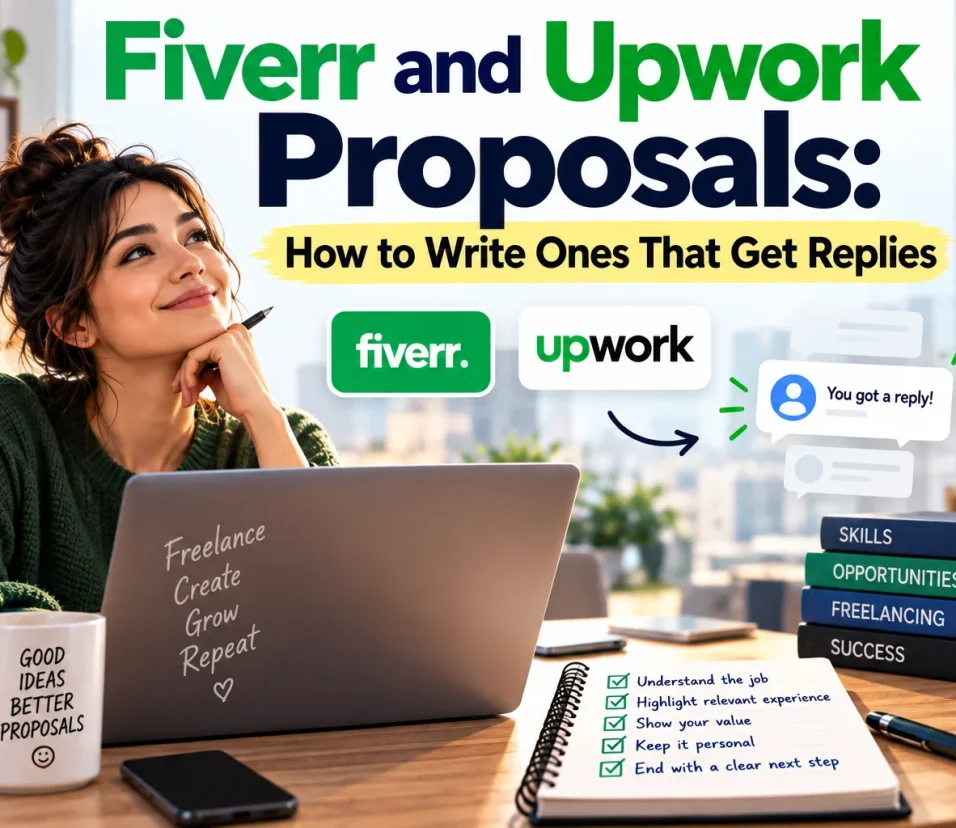
How to Write a Winning Upwork Proposal
Your proposal is not a resume.
It is a short sales message.
Start by showing that you understand the client’s project.
For example:
“I noticed you need a landing page that explains your service clearly and works well on mobile devices.”
Then explain how you would approach it.
For example:
“I would structure the page around the primary offer, supporting benefits, social proof, and a clear call-to-action while keeping the layout responsive.”
Then mention relevant experience or portfolio examples.
Finish with a useful question.
For example:
“Do you already have the copy and branding assets, or would you like the page structure to include content guidance as well?”
This creates a conversation.
What Not to Write in a Proposal
Avoid generic copy such as:
“Dear Sir, I have read your project. I am highly interested. I have five years of experience and I can do this perfectly. Please contact me.”
The client may receive many proposals that look almost identical.
Do not write a long biography.
Do not repeat the job description word-for-word.
Do not make unrealistic promises.
Do not claim experience you do not have.
Do not use fake testimonials.
Authenticity is more valuable than exaggerated claims.
Personalize Every Proposal
Personalization does not mean writing a 1,000-word proposal.
It means demonstrating that you actually read the job.
Mention one specific requirement.
For example:
“You mentioned that the existing website performs poorly on mobile. I would start by reviewing the responsive layout, image sizing, navigation, and key page elements before redesigning the affected sections.”
That sentence is more useful than:
“I can make your website beautiful.”
Specificity builds credibility.
Build Trust Without Reviews
A beginner’s biggest disadvantage is often the absence of reviews.
But you can compensate with other trust signals.
Use:
- Strong portfolio examples
- Clear specialization
- Professional communication
- Detailed project understanding
- Relevant certifications where genuinely earned
- Transparent process
- Realistic timelines
- Good questions
- Clean profile presentation
If you have previous professional experience outside the platform, you can mention relevant experience honestly.
For example:
“I previously worked on business websites and am now offering the same service through this marketplace.”
Do not fabricate platform experience.
Price Your First Freelance Project Carefully
Your first project is important, but that does not mean you should work for almost nothing.
Instead, calculate the project realistically.
Consider:
Estimated hours × acceptable hourly value + platform-related costs + complexity buffer
For fixed-price projects, clearly define the scope.
For example:
Included:
- One landing page
- Responsive design
- Contact form
- Two revisions
Not included:
- Custom plugin development
- Copywriting
- Hosting
- Additional pages
Clear scope prevents misunderstandings.
Avoid the “Unlimited Revisions” Trap
Unlimited revisions may sound attractive to clients.
But it can become a nightmare for freelancers.
A client may request:
- Change the color
- Change it again
- Try another layout
- Rewrite everything
- Change the design direction
- Start over
Instead, define reasonable revision limits.
More importantly, clarify what counts as a revision.
A revision should normally mean adjustments to the agreed direction—not an entirely new project.
Communicate Like a Professional
Good communication can differentiate you from technically stronger freelancers.
Before beginning, confirm:
- Project requirements
- Deliverables
- Deadline
- Assets
- Access requirements
- Number of revisions
- Final format
- Approval process
If something is unclear, ask.
Do not guess.
A five-minute clarification can prevent hours of unnecessary work.
Deliver More Than the Client Expects—But Within Scope
Going the extra mile does not mean doing unlimited free work.
Instead, improve the experience.
For example:
If you are delivering a website, you might provide a short explanation of how the client can update basic content.
If you are delivering an article, you might include a suggested SEO title and meta description if those were relevant to the agreed service.
If you are delivering a design, you might organize the files clearly.
Small professional touches can make the project feel more complete.
Ask for Feedback Professionally
Once the project is completed successfully, you can politely encourage the client to leave honest feedback according to the platform’s rules.
Do not pressure clients.
Do not offer deceptive incentives for positive reviews.
Do not create fake accounts or fake orders.
Your goal should be to build a genuine reputation.
Your first honest review is more valuable than several artificial ones.
Turn Your First Client Into Repeat Business
The first client should not necessarily be the end of the relationship.
Suppose you build a website for a business.
After completing the project, you may discover that the client also needs:
- Website maintenance
- Blog content
- SEO
- Landing pages
- Graphic design
- Technical support
If these services fit your skills, you can discuss future work professionally.
A satisfied client can become a repeat customer.
That is often more valuable than constantly searching for completely new clients.
Create a Simple Freelance Workflow
A repeatable workflow makes freelancing easier.
Use this process:
Step 1: Find Relevant Jobs
Search for projects matching your specialization.
Step 2: Evaluate the Client
Read the requirements carefully.
Step 3: Prepare a Personalized Proposal
Address the actual problem.
Step 4: Show Relevant Work
Send only useful portfolio examples.
Step 5: Discuss Requirements
Clarify scope and expectations.
Step 6: Confirm the Project
Make sure deliverables and deadlines are clear.
Step 7: Complete the Work
Follow the agreed scope.
Step 8: Deliver Professionally
Organize files and provide instructions where appropriate.
Step 9: Request Honest Feedback
After successful completion, encourage appropriate feedback.
Step 10: Follow Up
Stay available for relevant future work.
Why Some Freelancers Send 50 Proposals Without Getting a Client
Sending more proposals does not automatically solve the problem.
If 50 proposals produce zero interviews, investigate the process.
Ask:
Are You Applying to the Right Jobs?
If not, improve targeting.
Is Your Profile Relevant?
If not, improve positioning.
Are Your Proposals Generic?
If yes, personalize them.
Is Your Portfolio Weak?
If yes, create better examples.
Is Your Pricing Unrealistic?
Review scope and market expectations.
Are You Applying Too Late?
Some projects may already have strong applicant pools.
The solution is not always “send 100 more proposals.”
Sometimes the solution is to improve the quality of the first ten.
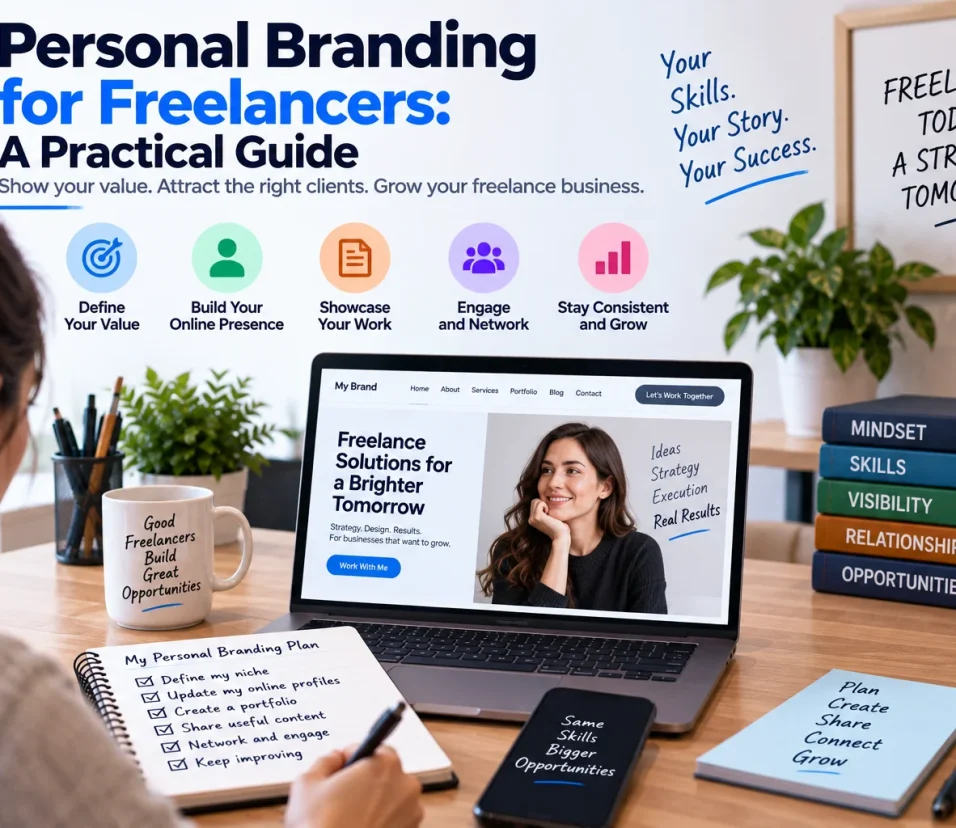
Create a Personal Brand Outside Freelance Platforms
Freelance marketplaces are useful, but you do not have to depend entirely on them.
Build a professional online presence.
You can use:
- A personal website
- A professional portfolio
- Industry communities
- Social media
- Professional networking
A client who discovers your work elsewhere may eventually hire you through an appropriate channel.
This also gives you more control over your professional identity.
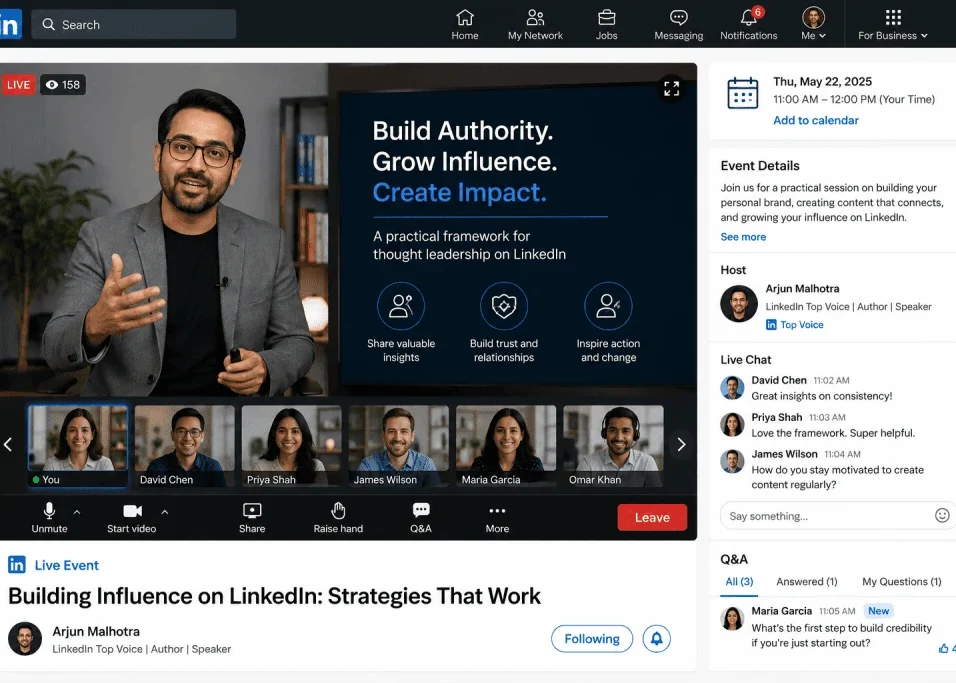
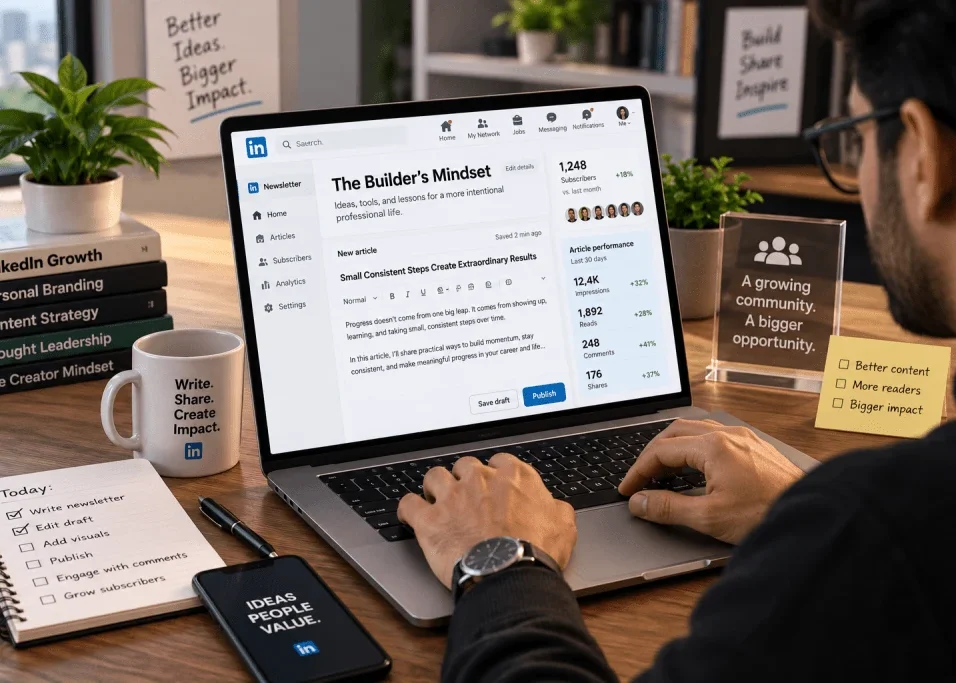
Use LinkedIn to Support Your Freelance Career
LinkedIn can help freelancers demonstrate expertise publicly.
For example, a web designer can post:
- Website redesign tips
- Before-and-after concepts
- UX observations
- Landing page analysis
A writer can publish:
- Writing tips
- SEO insights
- Content examples
A developer can share:
- Coding lessons
- Project breakdowns
- Technical tutorials
You do not need to post every day.
Consistency and usefulness matter more than volume.
Learn From Rejection
You will receive rejection.
Some clients will never respond.
Some will choose another freelancer.
Some projects will be canceled.
This is normal.
Do not interpret every rejection as evidence that you are not good enough.
Instead, look for patterns.
If clients repeatedly ask:
“Do you have experience with this?”
you may need stronger portfolio examples.
If they repeatedly say:
“Your price is too high,”
your positioning or scope may need adjustment.
If they never respond to proposals, your proposal strategy may need improvement.
Treat rejection as information.
Never Fake Reviews or Experience
This deserves special attention.
Never create fake client accounts.
Never buy fake reviews.
Never claim that a sample project was a real client project.
Never invent income screenshots.
Never use someone else’s work as your own.
These shortcuts can damage your reputation and may violate platform rules.
Build your freelance career honestly.
It may take longer in the beginning, but the foundation is stronger.
Protect Yourself From Freelance Scams
New freelancers can be vulnerable to suspicious job offers.
Be cautious when someone:
- Requests sensitive information unnecessarily
- Asks you to pay money to receive work
- Promises unusually high payment for minimal work
- Wants you to move outside platform procedures in suspicious circumstances
- Requests work far beyond the agreed scope without appropriate compensation
- Sends questionable files or links
- Asks you to perform financial transactions unrelated to your service
Use the platform’s official safety and reporting systems when appropriate.
Never sacrifice account security just to win a project.
A 30-Day Plan for Getting Your First Client
If you are starting from zero, use a simple schedule.
Days 1–5: Choose Your Service
Select one primary freelance service.
Research what clients commonly request.
Days 6–10: Build Your Portfolio
Create three to five strong sample projects.
Make them relevant to your target clients.
Days 11–15: Optimize Your Profiles
Create your Fiverr and/or Upwork profile.
Improve your headline, description, portfolio, and service presentation.
Days 16–20: Improve Your Proposals
Write several proposal variations based on different project types.
Practice explaining problems and solutions.
Days 21–25: Apply Strategically
Send targeted proposals rather than mass applications.
Track which types of jobs produce responses.
Days 26–30: Analyze and Improve
Review:
- Impressions
- Profile views
- Proposal responses
- Interviews
- Client questions
- Rejections
Then adjust your strategy.
The exact number of days is not a guarantee of results. The purpose is to create a disciplined process.
The Most Important Mindset for New Freelancers
Do not obsess over becoming successful overnight.
Your first objective is not necessarily to make a huge amount of money.
Your first objective is to build a system.
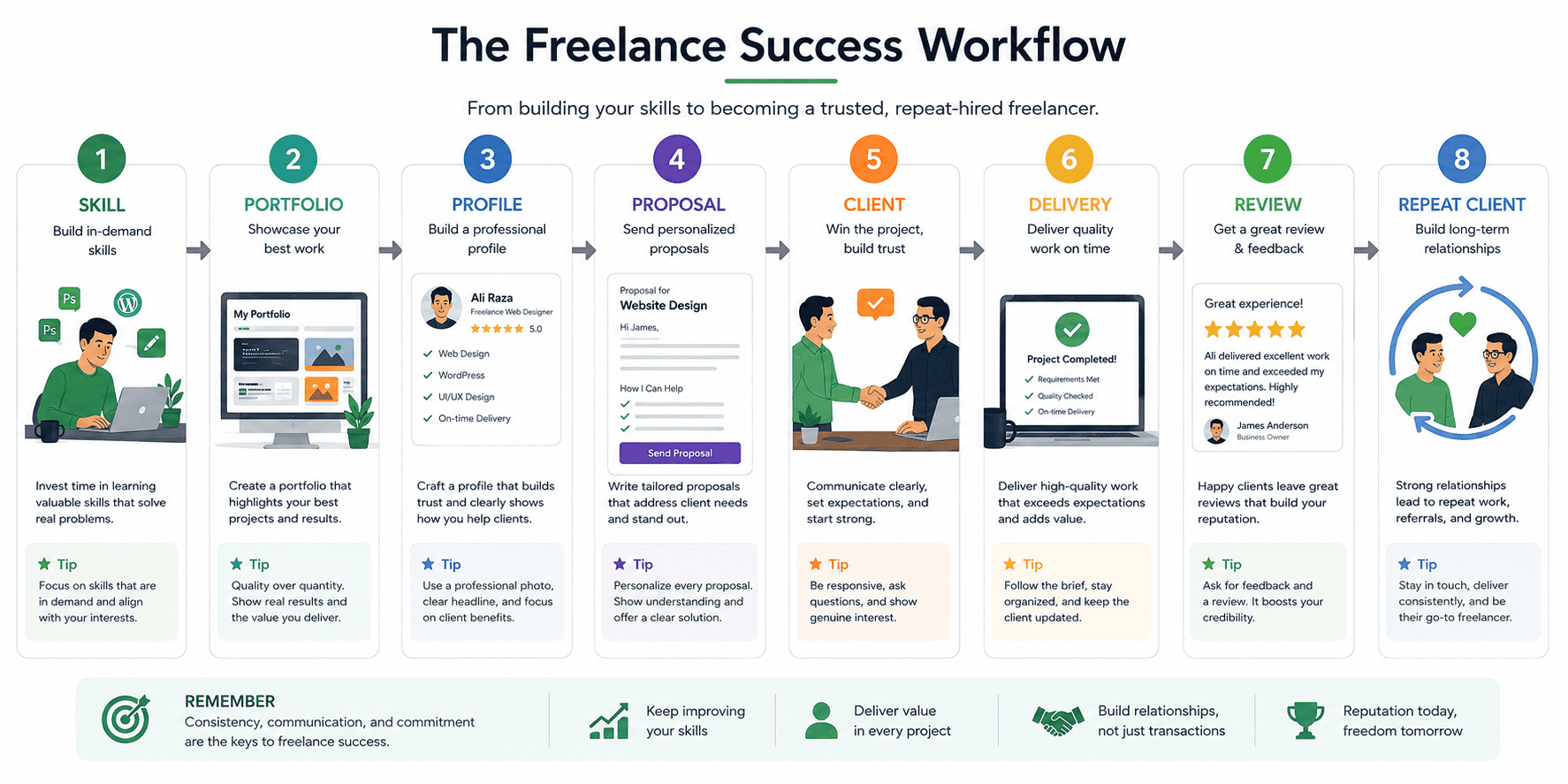
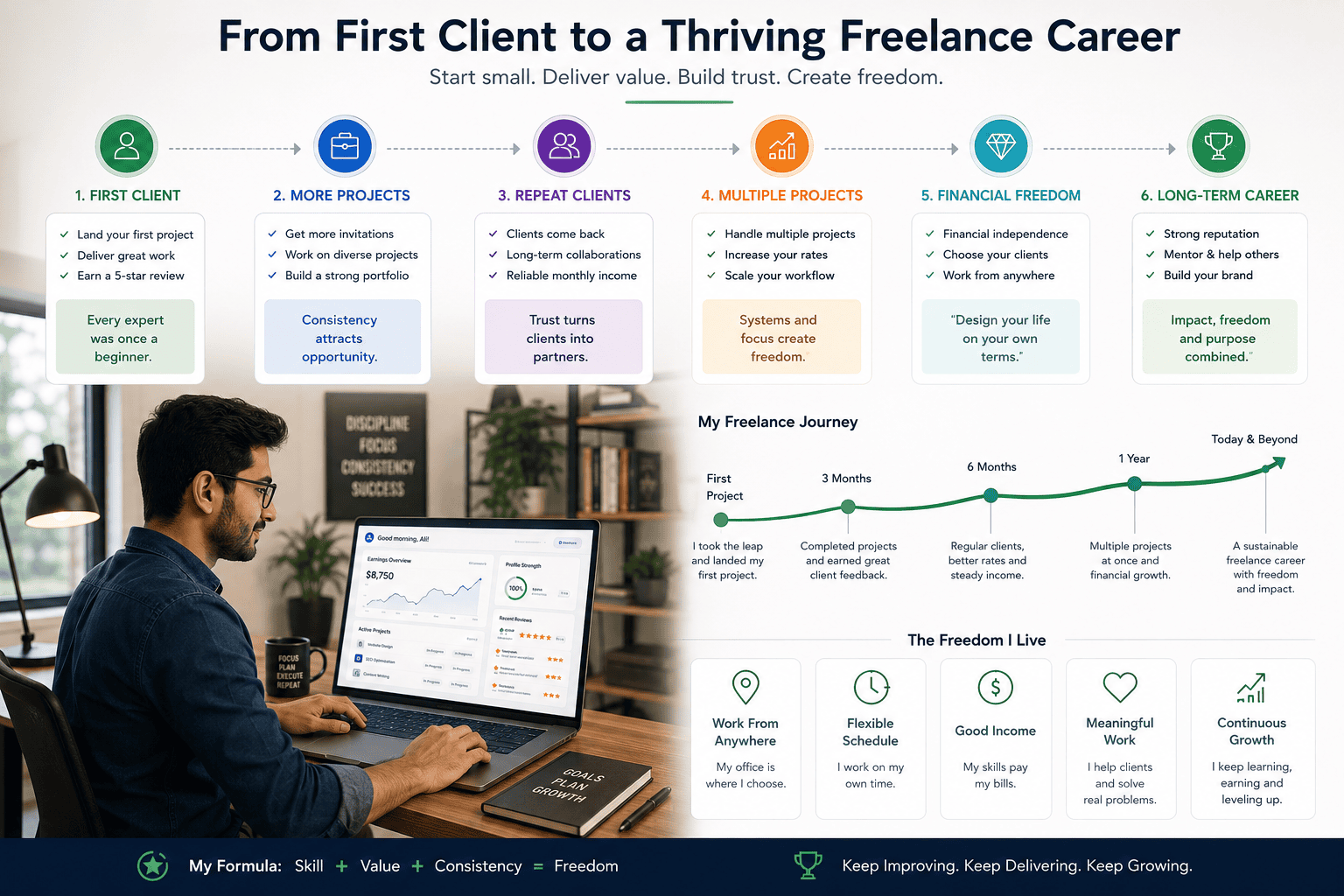
Skill → Portfolio → Profile → Proposal → Client → Delivery → Review → Repeat Client
Once you understand this process, freelancing becomes less mysterious.
Your first project may be difficult.
Your second can be easier.
After several successful projects, you may have reviews and case studies.
Eventually, you can increase prices and specialize further.
The goal is to create momentum.
Frequently Asked Questions
How can I get my first freelance client without experience?
Create relevant sample projects, specialize in a clear service, optimize your profile, submit personalized proposals, and communicate professionally. You can demonstrate ability through a portfolio even when you have limited platform history.
Is Fiverr or Upwork better for beginners?
Neither platform is universally better. Fiverr can work well for clearly packaged services, while Upwork can be useful for project-based work where clients post jobs and freelancers submit proposals.
How many proposals should I send every day?
There is no universal number. Focus on submitting high-quality applications to projects that genuinely match your skills rather than sending large numbers of generic proposals.
Should beginners work for free?
You generally do not need to work for free. Create sample projects to demonstrate your skills and charge a fair amount for actual client work. If you ever provide a free sample, keep its scope limited and avoid allowing it to become unpaid full project work.
How much should I charge as a beginner?
Pricing depends on your skill, service, project scope, market, and experience. Instead of copying another freelancer’s price, calculate how much time the project requires and clearly define what is included.
How important is a portfolio?
A portfolio can be extremely important because it gives potential clients evidence of your capabilities. Even before your first paid project, you can create honest sample or concept work.
Why am I getting views but no orders?
Views without orders can indicate problems with your offer, pricing, presentation, portfolio, description, or client targeting. Test different improvements rather than assuming you simply need more traffic.
Can I use AI tools in freelancing?
AI can assist with tasks such as brainstorming, research, drafting, organization, and repetitive workflows depending on the project. However, freelancers should follow client instructions, platform policies, copyright requirements, confidentiality expectations, and applicable laws. AI output should also be reviewed for accuracy and quality.
How do I get repeat freelance clients?
Deliver the agreed work professionally, communicate clearly, meet deadlines, and identify legitimate future needs that match your services. A good client relationship can lead to additional projects.
Final Thoughts
Learning how to get your first freelance client is less about discovering a secret Fiverr or Upwork trick and more about building a convincing professional offer.
For the next step, see our guide on how to write better Fiverr and Upwork proposals that get client replies.
You need to make it easy for a client to understand:
What do you do?
Who do you help?
Can you solve my problem?
Can I trust you?
What exactly will I receive?
A strong portfolio, focused profile, personalized proposal, realistic pricing, and professional communication can answer those questions.
Do not worry too much about having zero reviews at the beginning.
You cannot manufacture years of experience overnight.
What you can do is demonstrate your current ability honestly.
Start with one skill.
Build several strong examples.
Create a focused offer.
Target appropriate projects.
Write thoughtful proposals.
Deliver excellent work.
Ask for honest feedback.
Then repeat the process.
Your first client is not just a source of income. It can become the first piece of evidence that starts building your freelance career.